Education & knowledge
Education has evolved far beyond traditional classroom lectures and standardized testing. Today’s learning environments demand a multifaceted approach that embraces diverse learning styles, leverages technology thoughtfully, and equips learners with critical thinking skills applicable across all areas of life. Whether you’re an educator refining your practice, a parent supporting your child’s development, or a lifelong learner exploring new subjects, understanding the fundamental pillars of effective knowledge transfer can transform how you teach and learn.
This comprehensive resource explores six essential dimensions of modern education and knowledge acquisition. From applying scientific observation methods to everyday decision-making, to creating truly inclusive learning spaces, to bridging the digital divide across generations—each area represents a critical component of educational excellence. By examining these interconnected themes, you’ll gain practical insights into building learning experiences that are rigorous, accessible, engaging, and impactful for learners of all backgrounds and abilities.
How Can Scientific Thinking Transform Everyday Decisions?
The scientific method isn’t confined to laboratories or academic research. At its core, it’s a systematic approach to understanding the world through observation, hypothesis formation, and evidence-based conclusions. When applied to business challenges, personal relationships, or daily decisions, this framework helps us navigate complexity with greater clarity and reduced emotional bias.
Recognizing the Hidden Biases in Your Thinking
Every person carries cognitive shortcuts—mental patterns that help us process information quickly but can lead us astray. Confirmation bias, the tendency to seek information that supports existing beliefs while dismissing contradictory evidence, affects everyone from seasoned executives to new learners. Imagine a manager who believes remote work reduces productivity: they might focus exclusively on missed deadlines while overlooking increased employee satisfaction and retention. Recognizing these patterns is the first step toward more objective analysis.
Building a Structured Approach to Data Collection
Whether you’re evaluating a new software tool or assessing student comprehension, structured data collection transforms vague impressions into actionable insights. This involves clearly defining what you’re measuring, distinguishing between qualitative insights (descriptive observations like student engagement levels) and quantitative metrics (numerical data like test scores or completion rates), and establishing consistent collection methods. A feedback loop—regularly reviewing findings and adjusting your approach—ensures your conclusions remain relevant as circumstances evolve.
What Does True Inclusion Look Like in Learning Spaces?
Inclusive education recognizes that learners bring vastly different cognitive profiles, sensory sensitivities, and processing speeds to any learning environment. Rather than expecting students to adapt to a one-size-fits-all approach, truly inclusive practices reshape the environment itself to accommodate neurodiversity and varied learning needs.
Creating Supportive Physical and Sensory Environments
The physical learning space profoundly impacts student success. For neurodiverse learners—including those with autism, ADHD, dyslexia, or sensory processing differences—environmental factors like lighting, noise levels, and seating arrangements can mean the difference between thriving and struggling. Consider providing:
- Quiet zones with reduced visual clutter for students who experience sensory overload
- Flexible seating options including standing desks, wobble chairs, or floor cushions
- Visual schedules and clear spatial organization to reduce cognitive load
- Adjustable lighting and noise-canceling options for sensory-sensitive learners
Adapting Instruction and Assessment for Diverse Minds
Breaking down complex instructions into sequential, manageable steps benefits all learners but is particularly crucial for those with executive function challenges. Instead of saying “Complete the project,” effective instruction might specify: “First, read pages 12-15. Second, highlight three key concepts. Third, write one paragraph about each.” Similarly, modified assessment methods—allowing oral presentations instead of written essays, or providing extended time—ensure you’re measuring knowledge rather than processing speed. Assistive technology tools, from text-to-speech software to organizational apps, further level the playing field when implemented thoughtfully and with proper training.
Bridging the Digital Divide Across Generations
Technology literacy has become as fundamental as reading and arithmetic, yet millions of older adults feel excluded from an increasingly digital world. Teaching technology to seniors requires a fundamentally different approach than training digital natives—one that addresses both practical barriers and psychological hesitations.
Overcoming Physical and Interface Challenges
Aging often brings reduced vision, decreased motor control, and slower processing speeds. These physical realities necessitate thoughtful adaptations: larger text and buttons, simplified interfaces with fewer simultaneous options, and devices positioned at comfortable angles to reduce strain. A smartphone interface with six large icons will serve seniors far better than one displaying dozens of small apps across multiple screens.
Building Confidence Through Security and Documentation
Many older adults hesitate to adopt technology due to legitimate concerns about scams, privacy breaches, and financial fraud. Addressing these fears head-on—teaching how to recognize phishing emails, verify website security, and protect personal information—builds the confidence necessary for digital exploration. Creating written reference guides with screenshots and step-by-step instructions provides a safety net, allowing learners to proceed at their own pace without fear of “breaking” something. Remember: the learning pace should always be defined by the learner, not the instructor’s timeline.
How Can Remote Learning Actually Engage Students?
The shift to online education revealed both tremendous possibilities and significant challenges. When students appear as tiny rectangles on a screen, maintaining engagement requires intentional design choices that leverage technology’s strengths while compensating for the absence of physical presence.
Active Learning Techniques for Digital Spaces
Active recall—the practice of retrieving information from memory rather than passively reviewing notes—proves particularly effective in remote settings. Digital tools like polls, quick quizzes, and chat-based responses transform one-way lectures into interactive experiences. Gamification elements, from progress badges to leaderboards to timed challenges, tap into intrinsic motivation when implemented thoughtfully. The key is ensuring these elements enhance learning rather than distract from it.
Structuring Sessions for Maximum Impact
Effective remote sessions follow a deliberate flow: open with a clear agenda and learning objectives, alternate between instruction and interaction every 10-15 minutes to maintain attention, and close with synthesis and next steps. Breakout room dynamics—small group discussions or collaborative activities—provide crucial peer interaction and deeper processing opportunities. Meanwhile, slide design optimized for screens means:
- Minimal text per slide (6-8 words maximum) with high contrast for readability
- Visual emphasis through images, diagrams, or short video clips rather than bullet points
- Consistent navigation and clear visual hierarchy across the presentation
Why Does Hands-On Experimentation Matter for Young Learners?
Children develop critical thinking skills not through abstract lectures but through direct experimentation with the physical world. Safe home science projects teach the scientific method—asking questions, forming hypotheses, testing variables, and drawing conclusions—while building confidence and curiosity that extend far beyond the experiment itself.
Safety Foundations for Home Experiments
Age-appropriate chemical selection is paramount. Young children might explore density with oil and water or create chemical reactions with baking soda and vinegar, while older students could safely work with hydrogen peroxide or investigate pH using natural indicators like red cabbage. Protecting surfaces with washable mats, using designated containers that won’t be confused with food storage, and wearing basic safety equipment like goggles establishes professional habits early. Proper waste management and cleanup procedures—including safe disposal methods and thorough workspace sanitization—complete the safety framework.
Timing and Structure for Sustained Engagement
Experiment timing should match developmental attention spans: 15-20 minutes for younger children, 30-45 minutes for older students. Structuring each session with clear phases—setup, prediction, execution, observation, and conclusion—provides cognitive scaffolding while reinforcing the systematic thinking that characterizes genuine scientific inquiry.
Making Quality Education Accessible Within Budget Constraints
Financial limitations need not prevent educational excellence. Resourceful schools and programs worldwide demonstrate that strategic implementation, collaborative approaches, and creative use of available resources can deliver remarkable outcomes without substantial budgets.
Leveraging Human and Open-Source Resources
Peer-to-peer tutoring multiplies your educational impact while building leadership skills in student tutors. Older students explaining concepts to younger peers often achieve deeper understanding themselves while providing relatable instruction. Open-source assistive tools—from screen readers to learning management systems to accessibility checkers—offer professional-grade functionality at zero cost when you invest time in proper evaluation and implementation.
Strategic Implementation and Staff Development
Training existing staff effectively proves far more cost-efficient than hiring specialists for every new initiative. Develop internal expertise through train-the-trainer models where early adopters support broader implementation. Phase your implementation thoughtfully: pilot programs with small groups, gather feedback, refine your approach, then scale gradually. This iterative process prevents costly missteps while building institutional knowledge. Throughout implementation, remain aware of legal considerations—accessibility requirements, student privacy protections, and safety regulations—to avoid pitfalls that could derail even well-intentioned programs.
Education and knowledge acquisition thrive at the intersection of rigorous methodology, inclusive practice, and creative adaptation. By grounding decisions in evidence rather than assumption, designing environments that welcome diverse learners, bridging technological divides with patience and clarity, engaging students through active participation, encouraging hands-on discovery, and implementing thoughtfully within resource constraints, you create learning experiences that genuinely transform lives. The journey toward educational excellence is ongoing, but each principle explored here provides a concrete stepping stone toward more effective, equitable, and inspiring knowledge sharing.
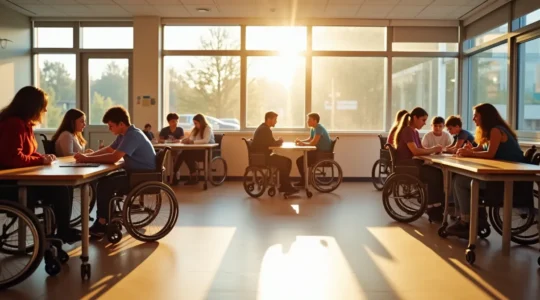
How Can Schools Implement Inclusive Education Without Breaking the Budget
True fiscal sustainability in inclusive education is not about across-the-board cuts, but about maximizing the return on every dollar invested. System-level changes like peer mentoring and ‘train the trainer’ models offer significantly higher leverage than recurring individual hires. The hidden…
Read more
How to Set Up Safe Science Experimentation Zones in a Small Kitchen?
In summary: Transform a corner of your kitchen into a designated “Lab Zone” using a simple, low-cost kit to contain messes and focus behavior. Prioritize safety by choosing age-appropriate reactions and understanding the correct disposal methods for each material to…
Read more
Which Teaching Methods Keep Remote Students Engaged After 20 Minutes?
Contrary to popular belief, fighting ‘Zoom fatigue’ isn’t about using more tools, but about designing experiences that counteract the cognitive distance of virtual learning. Passive slide-watching leads to abysmal retention because it overloads cognitive capacity without active processing. Awkward breakout…
Read more
How to Teach Digital Literacy to Seniors Without Frustration on Both Sides?
Teaching seniors technology isn’t about having more patience; it’s about deploying the right strategy that respects their unique needs. Adapt the tools to their physical reality, like using a wide-grip stylus to counteract arthritis. Manage cognitive load with short, single-goal…
Read more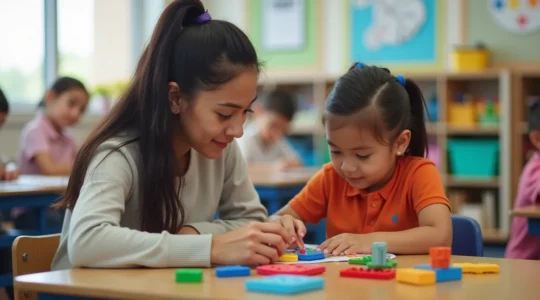
Beyond Patience: Actionable Pedagogical Adaptations for ADHD Student Success
The key to supporting students with ADHD isn’t just about accommodations, but about implementing precise strategies that align with their unique neurocognitive mechanics. Many common “helpful” adjustments, like a window seat, can backfire by creating cognitive overload rather than providing…
Read more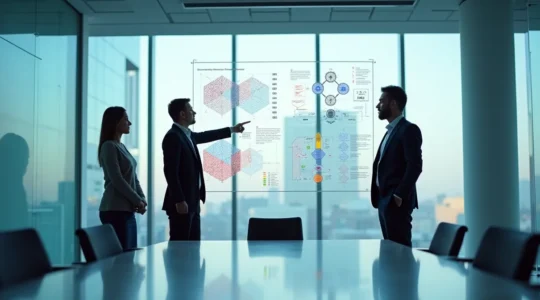
A Consultant’s Framework: Using Empirical Observation to Solve Recurring Business Problems
The solution to your most persistent business problems lies not in better intuition, but in a rigorous observational system. Intuition is demonstrably unreliable in high-stress situations, often leading you to solve the wrong problem. Objective data captured through structured checklists…
Read more