Home & environment
Your home environment profoundly influences your daily well-being, productivity, and emotional balance. From the moment you wake up to the quality of your sleep, every design choice—whether conscious or accidental—shapes how you experience your living space. Yet many people approach home improvement reactively, addressing isolated problems without understanding how space planning, lighting, color, and organization work together as an interconnected system.
Creating a truly functional and nurturing home requires more than aesthetic preferences. It demands practical knowledge of spatial dynamics, an understanding of how light affects perception and energy consumption, insight into color psychology, and systematic approaches to organization. This resource explores the foundational principles that transform houses into thoughtfully designed environments, providing you with the framework to make informed decisions that enhance both the functionality and emotional resonance of your living spaces.
Maximizing Space in Modern Living Environments
Urban density and rising housing costs have made spatial efficiency essential, regardless of your home’s actual size. The challenge isn’t simply fitting more objects into limited square footage—it’s creating a sense of openness and calm while accommodating the practical demands of contemporary life. Effective space optimization rests on three interconnected strategies that work together to multiply usable area.
Vertical Storage Solutions
Most homes suffer from underutilized vertical space. While floor area remains fixed, the cubic volume above eye level often goes completely unused. Wall-mounted shelving systems, ceiling-height cabinetry, and hanging storage can effectively double your storage capacity without consuming additional floor space. A practical example: a single wall of floor-to-ceiling shelving (8 feet tall by 6 feet wide) provides approximately 48 square feet of storage surface—equivalent to an entire small room’s floor area.
The key is selecting durable mechanisms. Look for wall-mounted systems rated for at least 50 pounds per shelf, as lighter-duty options create long-term frustration and safety concerns. Consider the frequency of access: items used daily belong at waist-to-shoulder height, while seasonal belongings can occupy upper zones requiring a step stool.
Multi-Functional Zones
Single-purpose rooms represent a luxury that few modern homes can afford. Instead, spaces must flex to accommodate multiple activities throughout the day. A dining table that serves as a workspace during morning hours, a guest room that functions as a home office, or a living room configured for both conversation and media viewing—these arrangements require intentional furniture selection and spatial planning.
Prioritize furniture with hidden storage capabilities: ottomans with internal compartments, bed frames with drawer systems, or console tables that conceal office supplies. This dual functionality prevents the visual chaos that undermines a room’s ability to shift between purposes.
Optimizing Visual Flow
Even spacious rooms feel cramped when furniture placement disrupts natural movement patterns. Visual flow refers to how easily your eye and body move through a space. The principle is straightforward: maintain 30-36 inches of clearance in primary pathways and ensure that doors can open fully without striking furniture.
Equally important is sightline management. When you enter a room, your gaze should extend to its farthest point without obstruction. This perceived depth creates a psychological sense of spaciousness that transcends actual measurements. Low-profile furniture and transparent materials (glass, acrylic) preserve these critical sightlines.
Kitchen Organization Systems That Actually Function
The kitchen experiences the highest transactional volume of any home space—dozens of interactions daily, from meal preparation to cleanup. Without systematic organization, this intensity creates cumulative disorder that demands constant corrective energy. Effective kitchen organization isn’t about magazine-worthy aesthetics; it’s about reducing cognitive load and physical effort during routine tasks.
Workflow Categorization
Professional kitchens organize items according to task-based zones: preparation, cooking, serving, and cleanup. This same logic transforms residential kitchens. Store cutting boards, knives, and mixing bowls near your primary prep surface. Keep pots, cooking utensils, and oils within arm’s reach of the stove. Position dishes and serving platters adjacent to where you plate food.
This geographic clustering eliminates the repetitive walking that turns simple cooking into an aerobic activity. Track your movements while preparing a typical meal—if you’re traversing the entire kitchen repeatedly, your storage system is working against you.
Dead Space Utilization
Standard kitchen cabinetry creates numerous inaccessible voids: corner cabinet depths, the vertical gap between shelf levels, toe-kick areas beneath base cabinets, and the space above wall cabinets. These zones collectively represent 15-25% of your kitchen’s cubic volume.
Retrofit organizers address these inefficiencies without requiring cabinet replacement. Pull-out corner shelving systems, stackable shelf inserts, toe-kick drawers, and above-cabinet storage platforms convert dead zones into functional space. The investment typically ranges from moderate to minimal, yet the capacity gains prove substantial.
Maintaining Long-Term Order
Organization systems fail when they demand more discipline than daily life realistically allows. Sustainability requires designing for your actual behavior patterns, not idealized versions of them. If you’ve never consistently transferred pantry items into matching containers, don’t invest in an elaborate decanting system—it will create guilt without solving problems.
However, if you purchase bulk dry goods regularly, clear airtight containers genuinely improve functionality by displaying quantities at a glance and preventing staleness. The key distinction: implement systems that reduce effort, not those that demand additional steps you’ll eventually abandon.
Mastering Natural and Artificial Light
Lighting profoundly affects spatial perception, energy consumption, task performance, and circadian rhythm regulation. Yet it remains one of the most misunderstood aspects of home environment design. Effective lighting strategy balances three objectives: maximizing beneficial natural light, selecting appropriate artificial sources, and minimizing electricity costs.
Amplifying Natural Light
Rooms lacking adequate daylight feel smaller, colder, and less inviting regardless of their actual dimensions or temperature. Before investing in artificial solutions, maximize natural light through strategic interventions. Reflective surfaces—particularly mirrors positioned perpendicular to windows—effectively double perceived light by bouncing photons throughout the space.
Paint finishes matter significantly. Matte paints absorb light, while eggshell and satin finishes reflect 10-20% more light back into the room without creating the harsh glare of fully glossy surfaces. Light colors obviously help, but the finish itself often proves more impactful than slight color variations.
Window treatments present a paradox: privacy and light control require coverings, yet heavy curtains eliminate the natural light you’re trying to preserve. Cellular shades, sheer curtains, and top-down bottom-up blinds allow nuanced control—blocking sightlines without completely darkening the space.
Energy-Efficient Lighting Choices
LED technology has fundamentally transformed residential lighting economics. A traditional 60-watt incandescent bulb costs approximately $7-10 annually in electricity at average usage rates, while an equivalent LED (8-10 watts) costs roughly $1-1.50. Over the LED’s typical 15-20 year lifespan, the savings per fixture range from $90-170, excluding replacement bulb costs for the incandescent option.
The return on investment for LED conversion is immediate in frequently-used fixtures (kitchens, living rooms) and extends to 12-18 months for occasionally-used spaces. Smart bulbs add $10-25 per unit but enable scheduling, dimming, and color temperature adjustment—features that enhance both convenience and energy efficiency.
Understanding Light Metrics
Lumens measure actual light output, while watts indicate only energy consumption. This distinction matters because LED technology produces the same luminosity as incandescent bulbs while consuming 75-85% less energy. For replacement purposes: 800 lumens ≈ 60W incandescent ≈ 9W LED.
Color temperature, measured in Kelvins, determines the psychological warmth of light. 2700K-3000K produces warm, amber-toned light suitable for relaxation spaces. 3500K-4100K offers neutral white for task-oriented areas. 5000K+ creates cool, blue-toned light that enhances alertness but feels institutional in residential settings. Dimmer switches add flexibility, allowing single fixtures to adapt to different times of day and activities.
The Psychology of Color in Interior Spaces
Color operates beneath conscious awareness, influencing mood, perceived temperature, spatial perception, and even physiological responses like heart rate and appetite. While personal preferences certainly matter, understanding color’s psychological mechanisms enables intentional choices that support your space’s intended purpose rather than accidentally undermining it.
Color Temperature and Mood
Colors fall along a temperature spectrum from warm (reds, oranges, yellows) to cool (blues, greens, purples). Warm colors psychologically activate—they increase perceived energy, stimulate conversation, and can even trigger appetite, which explains their prevalence in restaurant design. Cool colors calm, promote concentration, and create psychological spaciousness.
This isn’t mysticism—it’s measurable neurological response. Bedrooms benefit from cool or neutral tones that facilitate relaxation and sleep onset. Social spaces often work better with warm accents that encourage interaction. Home offices require colors that sustain focus without inducing drowsiness, typically cool-neutral tones or warm colors in muted saturation.
The 60-30-10 Design Rule
Professional designers rely on this proportional formula to create visual harmony: 60% dominant color (usually walls), 30% secondary color (upholstery, curtains), 10% accent color (pillows, artwork, accessories). This ratio prevents both monotony and chaos—providing enough consistency for coherence while incorporating sufficient contrast for visual interest.
The dominant color establishes the room’s overall character. The secondary color adds depth and prevents flatness. The accent color provides the memorable elements that give the space personality. Violating these proportions—for instance, using five colors in roughly equal amounts—creates visual competition that registers as clutter even in an uncluttered room.
Testing Before Committing
Paint colors transform dramatically under different lighting conditions, times of day, and adjacent color influences. The small swatch that looked perfect in the store may read entirely differently on your actual wall. Always test paint samples in the specific location, observing them in morning light, afternoon light, and artificial evening light over several days.
Apply samples to multiple walls within the room—a north-facing wall receives fundamentally different light than a south-facing one. Consider how the color interacts with your existing furniture and flooring. This testing period prevents expensive mistakes and the frustration of repainting spaces because the color “didn’t look like that” in your imagination.
Creating Welcoming Environments for Guests
Hospitality isn’t innate talent—it’s environmental design. Guests form impressions within seconds of entering your home, processing dozens of sensory inputs before conscious thought engages. Understanding these psychological mechanisms allows you to intentionally create spaces that communicate warmth, consideration, and comfort.
The Entryway Effect
The entryway disproportionately influences overall home perception. This “primacy effect” means the first space visitors encounter establishes expectations for everything that follows. An entryway that feels cluttered, dark, or confusing creates anxiety that persists throughout the visit, even if subsequent spaces are beautifully designed.
Effective entryways provide three functional elements: a surface for setting items down, a place to sit while removing shoes, and adequate lighting. Psychologically, they should offer clear visual direction toward the home’s social spaces—guests shouldn’t wonder where they’re permitted to go. A small table with fresh flowers or a welcoming scent (subtle candle, essential oil diffuser) engages positive sensory associations immediately.
Furniture Arrangement for Connection
Furniture positioned in straight lines against walls signals formality and discourages interaction. Conversational groupings—seating arranged in facing or perpendicular configurations with 4-8 feet of separation—create psychological permission for engagement. This distance allows comfortable eye contact and conversation volume without the forced intimacy of closer proximity or the disconnection of greater distance.
Ensure multiple seating options at slightly varying heights. Some guests prefer the supportive structure of dining chairs; others favor the relaxation of deep sofas. Providing choices allows individuals to self-select their comfort level rather than adapting to a single imposed option.
Sensory Layering for Warmth
Welcoming spaces engage multiple senses simultaneously. Visual warmth comes from layered lighting (ambient, task, and accent sources rather than a single overhead fixture), varied textures, and personal elements like books or photographs. Tactile comfort requires throws, cushions, and upholstery inviting enough to actually use.
Avoid “showroom syndrome”—spaces so pristine they communicate “don’t touch anything.” Guests perceive these environments as beautiful but unwelcoming. A lived-in aesthetic (within reason) signals that human comfort takes priority over decorative perfection. The goal is curated casualness: intentionally designed yet genuinely inviting.
Curating Displays and Decorative Elements
Decorative objects serve psychological functions beyond aesthetics—they express identity, commemorate experiences, and provide visual focal points that prevent sterile minimalism. Yet poorly curated displays create visual noise that undermines these benefits. The art lies in purposeful selection and strategic arrangement.
Minimalism vs. Purposeful Curation
Minimalism has been misinterpreted as the absence of possessions, when it actually means the absence of meaningless possessions. Purposeful curation asks whether each displayed item serves a function (even if that function is purely emotional). The heirloom vase from your grandmother justifies display space; the generic decorative object purchased because “something needed to go there” doesn’t.
This distinction reduces guilt around keeping beloved items while providing clear criteria for elimination. If an object doesn’t generate positive emotion when you look at it and doesn’t serve practical function, it’s consuming valuable visual bandwidth without earning its keep.
The Rule of Three
Human visual perception finds odd-numbered groupings more aesthetically pleasing than even numbers. Three objects of varying heights arranged in a triangle creates dynamic interest. Two objects feel incomplete; four objects create symmetry that reads as static. This isn’t arbitrary preference—it’s how our pattern-recognition systems process visual information.
Apply this principle to shelving displays, coffee table arrangements, and wall art groupings. Vary the heights, textures, and visual weights within the grouping to prevent monotony while maintaining cohesion through color coordination or stylistic consistency.
Seasonal Rotation and Strategic Lighting
Permanent displays become invisible through familiarity—your brain stops processing information it encounters daily. Rotating collections seasonally (quarterly or twice annually) refreshes your environment without requiring new purchases. Store off-season items in labeled containers, treating your decorative objects like a curated collection rather than permanent fixtures.
Strategic lighting transforms ordinary objects into focal points. Picture lights, LED strip lighting behind shelves, or small accent lamps create intentional visual hierarchy, directing attention to your most meaningful pieces while allowing secondary objects to recede into supporting roles. This layered approach prevents the “everything’s equally important, therefore nothing’s important” effect of uniform lighting.
Creating a truly functional and nurturing home environment requires integrating these principles into a coherent whole. Each element—spatial planning, organization, lighting, color, hospitality, and display—influences and amplifies the others. Start with the aspects that address your most pressing challenges, then gradually refine other areas as your understanding deepens. The goal isn’t perfection, but continuous improvement toward spaces that genuinely support your daily life and emotional well-being.
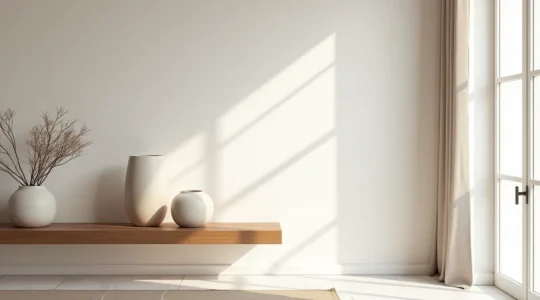
How to Style Decorative Objects Without Creating Visual Clutter?
The secret to an elegant display isn’t adding more, but intentionally subtracting. It’s a shift from merely arranging objects to actively curating your space. Effective styling relies on a “Curator’s Archive,” where 50% of your collection is thoughtfully stored to…
Read more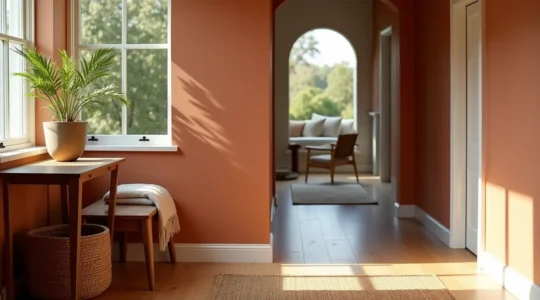
How to Design a Welcoming Home: The Psychological Secrets to Making Guests Feel Instantly at Ease
Contrary to the popular belief that a flawless, showroom-style house is the most welcoming, the true art of hospitality lies in psychological design. The secret isn’t achieving perfection, but intentionally creating “permission to relax.” This guide reveals how to move…
Read more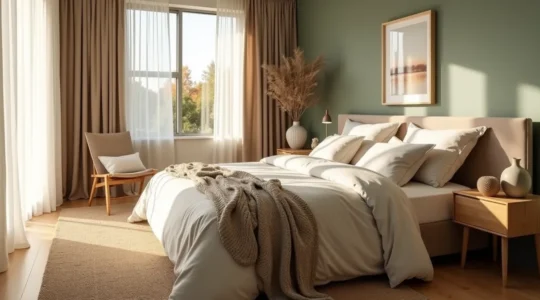
Which Color Palettes Promote Relaxation in a Master Bedroom?
Contrary to popular belief, the key to a relaxing bedroom isn’t just picking a “calm” color; it’s about orchestrating a neuro-aesthetic dialogue between color, light, and texture to actively soothe your nervous system. Activating colors like vibrant reds physiologically increase…
Read more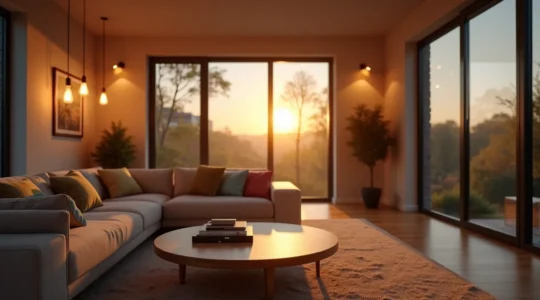
Beyond the Bulb: How Much Can Smart LED Lighting Really Save You Annually?
True lighting savings are not found by simply swapping bulbs, but by mastering the hidden, system-level inefficiencies that most homeowners and landlords overlook. Incompatible hardware like old dimmer switches can cause flickering and premature failure, negating your initial investment. “Vampire…
Read more
How to Increase Natural Light in a North-Facing Living Room?
Transforming a north-facing room isn’t about fighting its nature with generic tricks; it’s about mastering the physics of light. The key lies not in simply adding mirrors or painting walls white, but in understanding how to scientifically manipulate light reflection,…
Read more
How to Double Your Kitchen Capacity with Smart Storage Solutions?
Doubling kitchen capacity isn’t about constant decluttering, but about systematically re-engineering your kitchen’s spatial logic. The most valuable storage gains come from activating unused vertical and corner spaces with the right hardware. Optimizing your workflow by organizing items by task—not…
Read more
Beyond Square Feet: How to Furnish a 300 sq ft Studio with Modular Furniture for Space & Sanity
The key to a successful 300 sq ft studio isn’t just space-saving furniture; it’s using modularity to create a psychologically supportive environment. A quality Murphy bed offers a far greater return on investment in space and sleep quality than a…
Read more