
Contrary to popular belief, passive puzzles like crosswords are not the most effective way to protect your brain; true cognitive resilience comes from actively building new skills.
- Engaging in complex, hands-on creative activities like painting or playing an instrument builds “cognitive reserve” more effectively than simple memory retrieval tasks.
- The brain’s ability to form new connections (neuroplasticity) doesn’t decline with age, meaning it’s never too late to start a new creative practice for significant cognitive benefits.
Recommendation: Choose one new creative skill that genuinely interests you and dedicate just 10-15 minutes a day to practicing it. The consistency of the challenge matters more than the duration.
As we age, the fear of cognitive decline—forgetting names, losing our train of thought, or facing mental stagnation—becomes a palpable concern. In response, many turn to popular brain games, diligently filling out crossword puzzles or playing sudoku, believing these are the primary tools for keeping their minds sharp. This approach is rooted in the logical assumption that exercising memory is the key to preserving it. We’re told to “use it or lose it,” and these puzzles feel like a direct workout for our mental faculties.
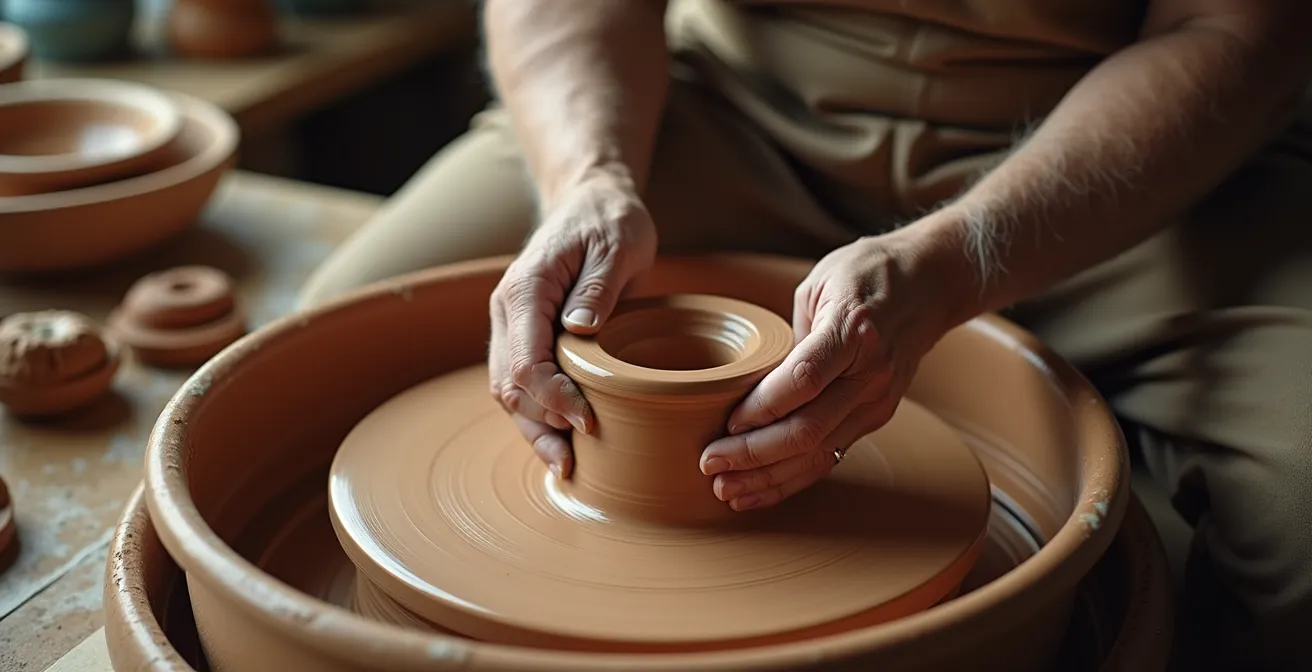
While any mental engagement is better than none, this focus on passive-retrieval tasks misses a more profound opportunity for brain protection. The latest neuroscience suggests that the most powerful defense against cognitive decline isn’t just about retrieving old information; it’s about actively constructing new neural pathways. But what if the key to a resilient, “younger” brain wasn’t found in a puzzle book, but at the tip of a paintbrush, on the keys of a piano, or in the focused movements of shaping clay?
This article reframes the conversation around brain health. We will move beyond the platitudes of “doing puzzles” and explore the scientific evidence demonstrating why engaging in complex, hands-on creative activities offers superior protection for the aging brain. We will delve into the specific cognitive mechanisms at play, dismantle the myth that you need “talent” to benefit, and provide practical starting points for anyone, regardless of past experience. It’s time to understand how you can actively build a more robust, flexible, and resilient brain for the years to come.
text
To navigate this exploration of cognitive science and creativity, this guide is structured to answer your most pressing questions. Below, the summary outlines the key topics we will cover, from the comparative benefits of different instruments to practical advice on starting your creative journey.
Summary: Creative Engagement: Your Brain’s Best Defense Against Cognitive Decline
- Piano vs. Guitar: Which instrument challenges the aging brain more effectively?
- Why doing crossword puzzles is less effective than learning to paint?
- How to start sketching when you haven’t drawn since kindergarten?
- The “talent” myth that stops adults from enjoying creative play
- When is the brain most receptive to learning new creative skills?
- How to use “Brainwriting” to double the number of actionable ideas?
- Why grouping items in odd numbers is more visually appealing to the brain?
- How to Teach Digital Literacy to Seniors Without Frustration on Both Sides?
Piano vs. Guitar: Which instrument challenges the aging brain more effectively?
When considering a musical instrument for cognitive enhancement, the choice is more than a matter of taste; it’s a question of neurological complexity. Both guitar and piano offer significant brain benefits, but the piano presents a unique set of challenges that are particularly effective for building cognitive reserve. The primary difference lies in the simultaneous, independent demands it places on the brain. Playing the piano requires bimanual coordination where both hands perform different, intricate tasks at once—one playing the melody, the other the harmony. This forces the two hemispheres of the brain to communicate intensely via the corpus callosum.
Furthermore, reading piano music involves processing two separate lines of notation (the treble and bass clefs) simultaneously, a complex task of visual-spatial translation that is less pronounced in a single-line instrument like the guitar (often learned with tablature or chords). This multidimensional challenge—combining fine motor skills, sight-reading, and auditory feedback—creates a dense network of new neural connections. Research consistently supports this; a University of Exeter study found that, among various instruments, piano players showed the highest cognitive benefits. While the guitar is a fantastic tool for neuroplasticity, the piano’s demand for complex, independent hand movements and dual-notation reading provides a slightly more rigorous and comprehensive brain workout.
Why doing crossword puzzles is less effective than learning to paint?
The common advice to do crossword puzzles to stave off cognitive decline is based on a misunderstanding of how the brain builds resilience. Crosswords are primarily an exercise in passive retrieval; you are accessing and recalling information that is already stored in your brain. While this can help maintain existing neural pathways, it does little to create new ones. It’s like walking the same familiar path in a forest every day—it keeps the path clear, but it doesn’t expand the map.

Learning to paint, by contrast, is an act of active construction. It forces your brain to engage in novel problem-solving from start to finish. You must translate a three-dimensional world onto a two-dimensional surface, make decisions about color theory, manage composition and perspective, and coordinate fine motor skills to execute your vision. This process heavily engages the brain’s frontoparietal network, which is responsible for attention, planning, and flexible thinking. A large-scale 2023 JAMA Network Open study found that creative activities like painting were associated with a lower risk of dementia, outperforming more passive hobbies. The act of creating something new from scratch builds robust neural scaffolding, offering far greater protection than simply retrieving old facts.
How to start sketching when you haven’t drawn since kindergarten?
The biggest barrier to starting a creative practice as an adult isn’t a lack of skill, but the fear of imperfection. The memory of being a “bad drawer” in childhood can be a powerful inhibitor. The key is to reframe the goal: you are not trying to create a masterpiece; you are trying to create new neural connections. The focus should be on the process, not the product. To begin, you need only a pencil and five minutes. Start by simply observing an object—a coffee mug, your own hand—and trying to trace its outline with your eyes before putting pencil to paper.
Embrace exercises designed to bypass your internal critic. For instance, try “blind contour drawing”: place your pencil on the paper and draw the outline of an object without looking down at your hand or lifting the pencil. The resulting image will be distorted and strange, and that is the point. This exercise severs the perfectionist link between hand and eye, forcing your brain to focus purely on observation and motor control. Another powerful technique is to use your non-dominant hand, which creates cognitive friction and stimulates the brain in a completely new way. The goal is to make the experience a playful exploration, rewarding the effort of trying rather than the quality of the outcome.
Action Plan: Auditing Your Creative Readiness
- Points of Contact: List all past or present creative curiosities, no matter how small (e.g., doodling during meetings, appreciating beautiful typography, humming new melodies, enjoying interior design).
- Collect: Inventory the resources you already have. This includes physical tools (a pen, a notebook, an old camera) and, most importantly, pockets of time (10 minutes during your lunch break, 15 minutes before bed).
- Coherence: Confront your list of interests with your personal values. Which of these activities would bring you joy, a sense of calm, or a feeling of accomplishment? Align your choice with what you truly need.
- Mémorabilité/Émotion: From that aligned list, identify the one activity that sparks genuine excitement versus a feeling of “I should do this.” This unique spark is your intrinsic motivation, the most powerful fuel for consistency.
- Plan d’intégration : Commit to one microscopic, non-intimidating action for the next seven days. Instead of “learn to draw,” make it “draw one circle on a piece of paper every day.” The goal is to build the habit, not the skill—the skill will follow.
The “talent” myth that stops adults from enjoying creative play
One of the most destructive misconceptions in our culture is the idea that creativity is a fixed trait—an innate “talent” you either have or you don’t. This belief creates a crippling fear of failure for adults, preventing them from even trying activities they might enjoy and benefit from. From a neuroscientific perspective, this is fundamentally untrue. The brain’s capacity for change and growth, known as neuroplasticity, is lifelong. Every time you attempt a new skill, you are physically forging new neural pathways and strengthening existing ones.
Think of it like physical fitness. No one is born with the ability to run a marathon; it is built through consistent training. Similarly, creativity is a skill that is developed through practice, not an inborn gift. The initial awkwardness and “bad” results are not a sign of a lack of talent; they are evidence that your brain is working hard, building new connections, and creating the very neural scaffolding that will support future skill and cognitive health. Embracing the role of the beginner is essential. As neuroscience research confirms, brain plasticity and new neural connections can be formed at any age through creative activities. The joy and the cognitive benefits are found in the process of learning, not in achieving a predetermined standard of quality.
Creativity is not something you have or don’t have. It is something you build.
– Nature Communications Research Team, Psychology Today – Brain Longevity Study
When is the brain most receptive to learning new creative skills?
While it’s true that learning is rapid in childhood, the adult brain remains highly receptive to new skills, particularly when the conditions are right. It’s less about a specific age and more about a specific state of mind and body. The brain is most primed for learning when it is stimulated, engaged, and free from excessive stress. For example, light physical exercise before a creative session can increase levels of Brain-Derived Neurotrophic Factor (BDNF), a protein that acts like a fertilizer for neurons, promoting growth and new connections.
Crucially, adult learning is supercharged by personal meaning. Unlike a child learning in a structured school environment, an adult choosing to learn an instrument or a craft is driven by intrinsic motivation. This emotional investment activates the brain’s reward systems, reinforcing the learning process. The proof is compelling.
Case Study: The University of South Florida Adult Piano Study
In a study focusing on adults aged 60-85 with no prior musical experience, researchers provided one group with six months of personalized piano lessons. Compared to a control group that did not receive lessons, the piano learners demonstrated significant and robust gains in memory, verbal fluency, information processing speed, and planning ability. As highlighted in an article by National Geographic covering the study, this proved that structured creative learning can induce substantial cognitive improvements late in life, particularly when the activity is personally meaningful.
How to use “Brainwriting” to double the number of actionable ideas?
One of the great cognitive benefits of creativity is its ability to enhance divergent thinking—the capacity to generate multiple unique ideas or solutions to a problem. However, our internal critic often shuts down ideas before they are fully formed. Brainwriting is a powerful technique to bypass this mental filter and unlock a greater volume of creative thoughts. Unlike brainstorming, which can be dominated by loud voices, brainwriting is a silent, individual process that encourages unfiltered output.
The core principle is to separate the act of idea generation from the act of evaluation. By giving yourself a short, timed window to write down every thought that comes to mind on a specific topic—without judgment—you allow your brain’s associative network to fire freely. This process forces you to move past the obvious first ideas and dig into deeper, more original territory. Only after the generation phase is complete do you switch to an analytical mindset, reviewing, combining, and building upon the raw material you’ve produced. This method can be applied to anything from planning a garden to solving a work-related challenge or coming up with a theme for a series of sketches.
To implement a solo brainwriting session for a personal creative project, follow these steps:
- Set a 5-minute timer and write down every single idea related to your topic, no matter how wild or impractical. Do not stop to edit or judge.
- Take a 2-minute break to clear your mind. Then, review your list and start building upon each initial idea with a second or third thought.
- Rotate perspectives: Look at your ideas and ask how you could interpret them visually, emotionally, or practically.
- Create connections by trying to link two or more unrelated ideas on your list to force new and unexpected combinations.
- Finally, select the most promising ideas and consider how they could apply to your project, whether it’s a chapter for a memoir, a new recipe, or a solution to a nagging problem.
Why grouping items in odd numbers is more visually appealing to the brain?
The “rule of odds” is a well-known principle in visual arts like photography, interior design, and painting, but its power comes from a specific cognitive mechanism. When we see an even number of items, our brain can easily pair them up, creating a sense of static order and balance. The composition feels stable, resolved, and our brain quickly processes it and moves on. However, when presented with an odd number of items—three, five, seven—the brain cannot create simple pairs. There is always one element left over.
This “leftover” item creates a subtle visual tension. It forces our eyes to move around the composition, actively engaging with the elements to make sense of the grouping. This increased cognitive workload is, paradoxically, more pleasing. It holds our attention longer and makes the image feel more dynamic and interesting. This principle demonstrates a key concept for brain health: a small amount of cognitive friction or unresolved tension is a workout for the brain. Consciously applying the rule of odds when sketching a still life, arranging flowers, or taking a photograph is not just an artistic choice; it’s a micro-exercise for your brain’s planning and compositional systems, engaging both hemispheres in a task of active problem-solving.
Key Takeaways
- True cognitive benefit comes from “active construction” (learning new, complex skills) rather than “passive retrieval” (doing puzzles with existing knowledge).
- The brain’s neuroplasticity is lifelong, meaning you can build new neural pathways and gain significant cognitive benefits from creative learning at any age.
- The most effective creative activities are complex, requiring fine motor skills, planning, and multi-sensory integration (e.g., playing piano, painting, pottery).
How to Teach Digital Literacy to Seniors Without Frustration on Both Sides?
Introducing digital creative tools to older adults often fails because the focus is on the technology, not the purpose. The key to success is to frame digital literacy not as a technical chore, but as a gateway to a personally meaningful creative outlet. Instead of starting with email or social media, begin with software that connects directly to an existing passion. For a genealogy enthusiast, introduce a family tree-building program. For a lifelong painter, introduce a simple digital painting app on a tablet. This purpose-driven approach provides intrinsic motivation that makes overcoming technical hurdles worthwhile.
One of the biggest sources of frustration is the fear of “breaking something.” This can be almost entirely eliminated by introducing the “undo” button (Ctrl+Z or Cmd+Z) as the very first lesson. Framing it as a magical safety net that allows for infinite experimentation without consequence removes the fear of making mistakes. It encourages play and exploration, which are essential for learning. Furthermore, it’s helpful to explicitly connect digital tasks to brain health. Explain that using layers in an image editor is a workout for abstract thinking, or that organizing a digital photo album strengthens planning and categorization skills. By focusing on motivation, removing fear, and highlighting the cognitive benefits, the process of learning digital tools transforms from a frustrating task into an empowering creative journey.
To begin building a more resilient and creative brain, the next logical step is to choose one small, intriguing activity from this guide and commit to practicing it for just ten minutes a day.