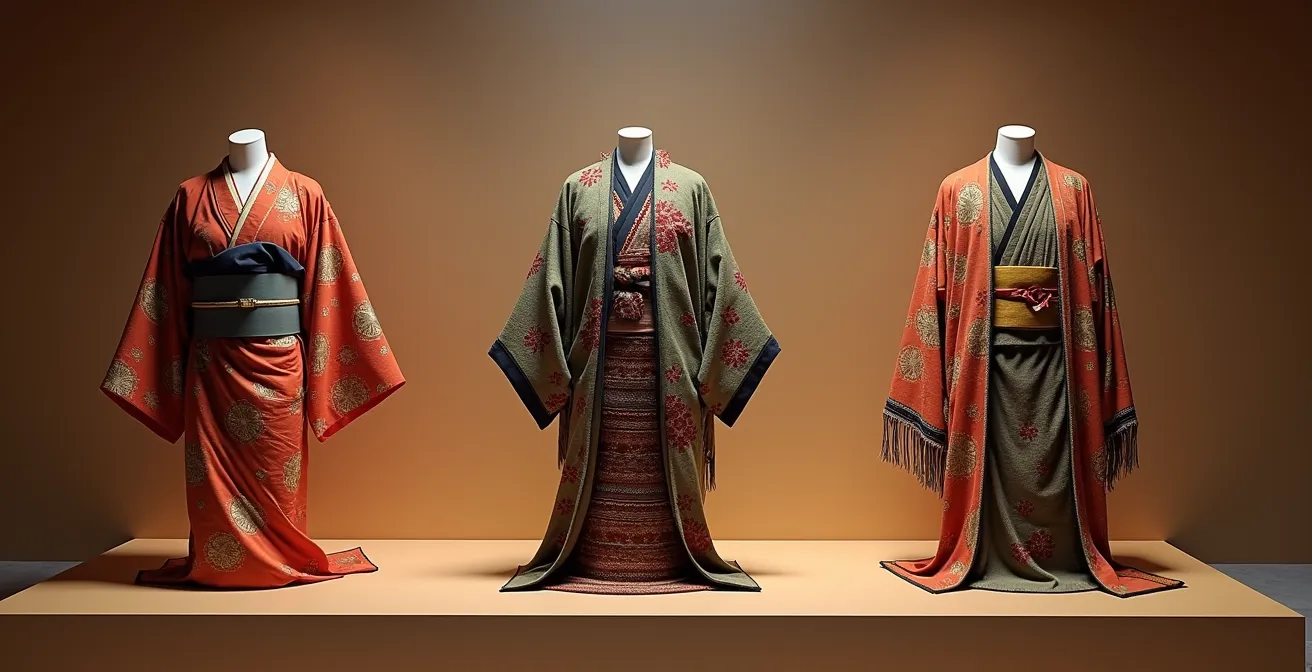
Navigating cultural expression in fashion isn’t about a simple checklist of ‘dos and don’ts’; it’s about mastering a ‘ritual of exchange’ built on respect, reciprocity, and understanding.
- Context and power dynamics determine whether an act is appreciative (a tourist respectfully wearing a kimono) or appropriative (a runway decontextualizing it for profit).
- True appreciation involves direct collaboration and compensation for source communities, transforming them from invisible laborers into celebrated partners.
Recommendation: Treat every cultural element not as a trend to be taken, but as a story to be honored. Before you buy or design, ask: Who made this? What is its story? And how does this benefit the source culture?
In an increasingly connected world, global cultures offer a rich tapestry of inspiration for fashion designers and consumers alike. Yet, this creative exchange is fraught with tension. The fear of crossing the invisible line from respectful appreciation to harmful appropriation has left many designers and consumers paralyzed, worried that a celebration of global style might be misinterpreted as an act of offense. This anxiety is not unfounded; the history of fashion is littered with missteps that have caused real harm to marginalized communities, trivializing sacred traditions and profiting from their heritage without acknowledgment or compensation.
The common advice—”give credit,” “be respectful”—is often too vague to be practical. It fails to address the deep-seated power imbalances and economic disparities at the heart of the issue. The conversation has become a minefield of accusations and defensive reactions, obscuring the path toward a more ethical and equitable future for fashion. The fundamental problem is that we often treat cultural elements as inanimate objects or free-floating aesthetics, ready to be plucked and repurposed at will. We admire the “what”—the pattern, the garment, the symbol—without engaging with the “who,” “why,” and “how” behind it.
But what if the solution wasn’t a rigid set of rules, but a different way of thinking? This article proposes a more profound framework: the “Ritual of Exchange.” By viewing cultural elements not as commodities but as offerings imbued with history and meaning, we can shift our perspective from one of taking to one of respectful dialogue. Drawing a surprising parallel with the precise etiquette of Japanese business card exchange, we will explore how principles of deference, context, and reciprocity can provide a clear and actionable guide. This approach moves beyond fear and into a space of conscious, informed engagement, empowering both creators and consumers to participate in a global fashion dialogue that is truly celebratory and just.
This guide will deconstruct the core principles that separate appreciation from appropriation, providing practical tools and ethical frameworks to navigate this complex terrain. We will examine real-world case studies and offer clear steps to ensure your style choices honor, rather than harm, the cultures that inspire you.
Summary: Navigating the Complexities of Cultural Expression in Fashion
- Why wearing a kimono is different for a tourist vs. a runway model?
- Authentic vs. Inspired: Why buying directly from indigenous makers changes the narrative?
- How to credit a culture correctly when styling a global look?
- The sacred symbol mistake that turns a fashion statement into an insult
- When does a cultural symbol become a “costume” during Halloween?
- The “Meishi” exchange mistake that ruins your first impression instantly
- The 3 questions that reveal if a vendor actually made the product
- How to Master Intercultural Dialogue When Moving to Japan for Work?
Why wearing a kimono is different for a tourist vs. a runway model?
The distinction between appreciation and appropriation often hinges on three critical factors: power, profit, and permission. The context in which a cultural element is used fundamentally changes its meaning and impact. A tourist in Japan who rents a kimono for the day, participates in a tea ceremony, and learns about its cultural significance is engaging in appreciation. Their action is one of temporary immersion and respect, typically without a power imbalance or commercial exploitation. The exchange is educational and honors the host culture.
Contrast this with a high-fashion brand that puts a “kimono-style” robe on a runway. Here, the power dynamic is skewed. The brand, a commercial entity, profits from an aesthetic that is detached from its cultural origins. The garment is often altered, decontextualized, and presented without any reference to its rich history or the artisans who perfected the craft. This act transforms a piece of cultural heritage into a disposable trend. As a 2020 interview with WWD highlights, the central issue is often erasure.
The reason why I’m extremely critical of appropriation is because it makes the laborers invisible. When appropriation happens, the labor of the original producers becomes invisible and that is highly unfair.
– Dr. Serkan Delice, London College of Fashion
The runway model’s act becomes appropriative because it extracts the visual “currency” of the kimono without acknowledging its symbolic weight or the people who sustain its legacy. The tourist’s act, conversely, is appreciative because it is framed by a desire to learn and participate within the culture’s own terms. It is not about taking, but about experiencing.
Ultimately, the difference is not in the garment itself, but in the ritual of its use. One is a respectful dialogue, the other a profitable monologue.
Authentic vs. Inspired: Why buying directly from indigenous makers changes the narrative?
One of the most powerful ways to ensure you are appreciating, not appropriating, is to shift your economic focus. When you purchase a piece of clothing or jewelry directly from the indigenous artisans or community that created it, you fundamentally alter the narrative from one of extraction to one of economic sovereignty and partnership. This act directly acknowledges and compensates the creators for their intellectual and cultural property, making them active participants in the global market rather than passive sources of “inspiration.”
This approach moves beyond simple appreciation and into the realm of active support. It ensures that the financial benefits flow back to the community, helping to preserve their traditions for future generations. It validates their craft as a living, breathing art form, not a relic of the past. By engaging directly, you are not just buying a product; you are investing in a culture and honoring a lineage of skill. The story of the object remains connected to its source, and the artisans are empowered as storytellers and business owners.
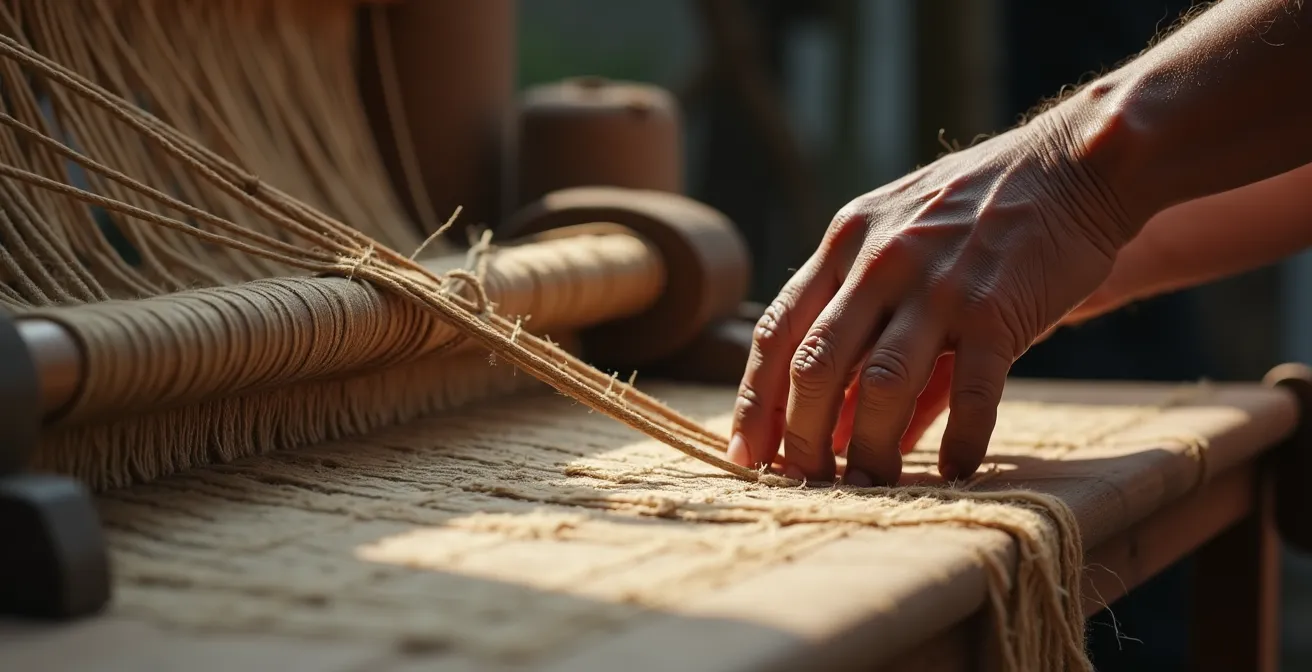
This model of collaboration is not just a theory; it is being successfully implemented by forward-thinking designers. As this case study shows, respectful partnership is not only ethical but also creatively enriching.
Case Study: The Collaborative Models of Stella Jean and Prabal Gurung
Designers like Stella Jean and Prabal Gurung provide an excellent blueprint for ethical collaboration. According to a feature in Fashion Journal, Stella Jean works directly with artisans from Haiti and the Caribbean to create her collections. This partnership provides a global platform for marginalized communities to be seen and, crucially, paid for their expertise. Similarly, Prabal Gurung’s collaborations with Nepalese artisans ensure their work is credited and celebrated on an international stage. These designers are not just “inspired by” a culture; they are actively engaging with and uplifting the communities they draw from, creating a cycle of reciprocity and mutual respect.
Choosing to buy from the source is a political and ethical act. It declares that cultural labor has value and that the people who create it deserve to be at the center of their own story.
How to credit a culture correctly when styling a global look?
Giving credit is the absolute minimum requirement for ethical cultural engagement, but “credit” is not a monolithic concept. A vague #inspiredby hashtag is not enough. True, meaningful attribution requires a level of specificity and a commitment to directing attention—and commerce—back to the source. The goal is to use your platform not just to showcase an aesthetic, but to amplify the voice and visibility of the culture of origin. This requires moving along a spectrum from basic acknowledgment to active promotion.
At its most basic level, credit involves naming the culture and region. A better approach is to name the specific community or artisan group and the traditional techniques they employ. This shows a deeper level of research and respect. However, the gold standard of attribution goes further. As one expert source puts it, “Don’t call it ‘inspired’ if you don’t name the source, because credit is the bare minimum. Compensation is better and collaboration is best.” This means your “credit” should have a tangible benefit for the community.
This can be achieved by not only telling the story of the garment and its makers but also by actively linking to their online shops, social media profiles, or community-led initiatives. Your credit becomes a bridge, inviting your audience to engage directly with the source culture. It transforms a passive mention into an active endorsement, shifting the dynamic from appropriation to alliance. The following model provides a clear pathway for escalating your level of attribution.
- Level 1 (Good): Name the culture and region of origin in all communications (e.g., “This pattern is inspired by traditional Maasai beadwork from Kenya”).
- Level 2 (Better): Name the specific community or artisan group and their traditional techniques (e.g., “This piece was hand-woven by the Zapotec weavers of Teotitlán del Valle, using a backstrap loom technique”).
- Level 3 (Best): Link to their online shop, tell their specific story, and actively drive traffic and commerce to the source (e.g., “Discover more from this artist collective and purchase their work directly at [link]”).
Ultimately, correct crediting is about ceding the spotlight and using your privilege to create meaningful opportunities for the communities whose creativity enriches our world.
The sacred symbol mistake that turns a fashion statement into an insult
Not all cultural elements carry the same weight. While borrowing a color palette or a general silhouette may be a matter of inspiration, using a sacred symbol is an entirely different proposition. Sacred symbols are elements of a culture’s deepest identity, faith, and systems of honor. They are not mere decorations; they are earned, bestowed, or hold profound spiritual significance. To use them as a fashion accessory is to strip them of their meaning and show profound disrespect for the values of an entire people. This is the most egregious form of appropriation, as it trivializes what is held most dear.
The key mistake is treating a sacred object as an aesthetic choice, divorced from its contextual integrity. For example, the Native American war bonnet is not a hat. Each feather is earned through acts of bravery and service to the community. To wear one as a festival accessory is to mock that entire system of honor. Similarly, the bindi in Hinduism has deep religious and marital significance. Reducing it to a glittery sticker for a concert is an act of spiritual erasure. These are not fashion statements; they are identities.
Case Study: The Victoria’s Secret Native American Headdress Controversy
A classic and painful example of this error occurred at the 2012 Victoria’s Secret fashion show. As documented by the Fashion Law Journal, model Karlie Kloss walked the runway wearing a floor-length Native American-style feathered headdress paired with leopard-print lingerie. The brand was widely accused of sexualizing and trivializing a deeply sacred object, demonstrating a profound ignorance of and indifference towards the values and painful history of indigenous peoples. The backlash was swift, leading to an apology from both the brand and the model, but the incident remains a textbook example of appropriation at its most insulting.
The following table illustrates the stark contrast between the intended meaning of sacred symbols and their misuse in fashion, a conflict that inevitably leads to cultural harm.
| Sacred Context | Fashion Misuse | Cultural Impact |
|---|---|---|
| War bonnets earned through spiritual achievement | Festival accessories at Coachella | Erasure of honor system |
| Hindu bindi worn for religious purposes | Decorative forehead jewelry | Spiritual meaning stripped |
| Sikh turban as article of faith | $790 Gucci ‘Indy Full Turban’ | Sacred object commodified |
The rule is simple: if a symbol is tied to faith, spirituality, or a system of honor you are not a part of, do not wear it. Your aesthetic preference does not outweigh a culture’s sacred identity.
When does a cultural symbol become a “costume” during Halloween?
Halloween presents a unique and concentrated challenge in the discourse of cultural appropriation. It is a holiday centered on dressing up, often as characters or archetypes. However, when “culture” is treated as a “costume,” the line is definitively crossed into appropriation. A person’s identity, ethnicity, and heritage are not costumes to be worn for a night of entertainment. This act reduces complex, living cultures to a set of one-dimensional, often offensive, stereotypes.
A “Pocahottie” or “Sexy Geisha” costume, for example, does not celebrate Native American or Japanese culture. Instead, it perpetuates harmful, hyper-sexualized stereotypes of women from those communities. It erases the reality of their lives, struggles, and diverse identities, packaging their culture for consumption by outsiders. As analysis from a Critical Race Theory perspective demonstrates, this practice often reinforces existing racial hierarchies and discrimination by turning marginalized identities into a caricature for the dominant culture’s amusement.
The critical difference lies in representation versus identity. Dressing up as a specific, fictional character who happens to be from a certain culture (like Moana) is different from dressing up as a generic “Polynesian” or “tribal” person. One is an homage to a character; the other is a caricature of a people. True appreciation involves recognizing that cultures are dynamic, contemporary, and lived by real people—not static, historical exhibits.
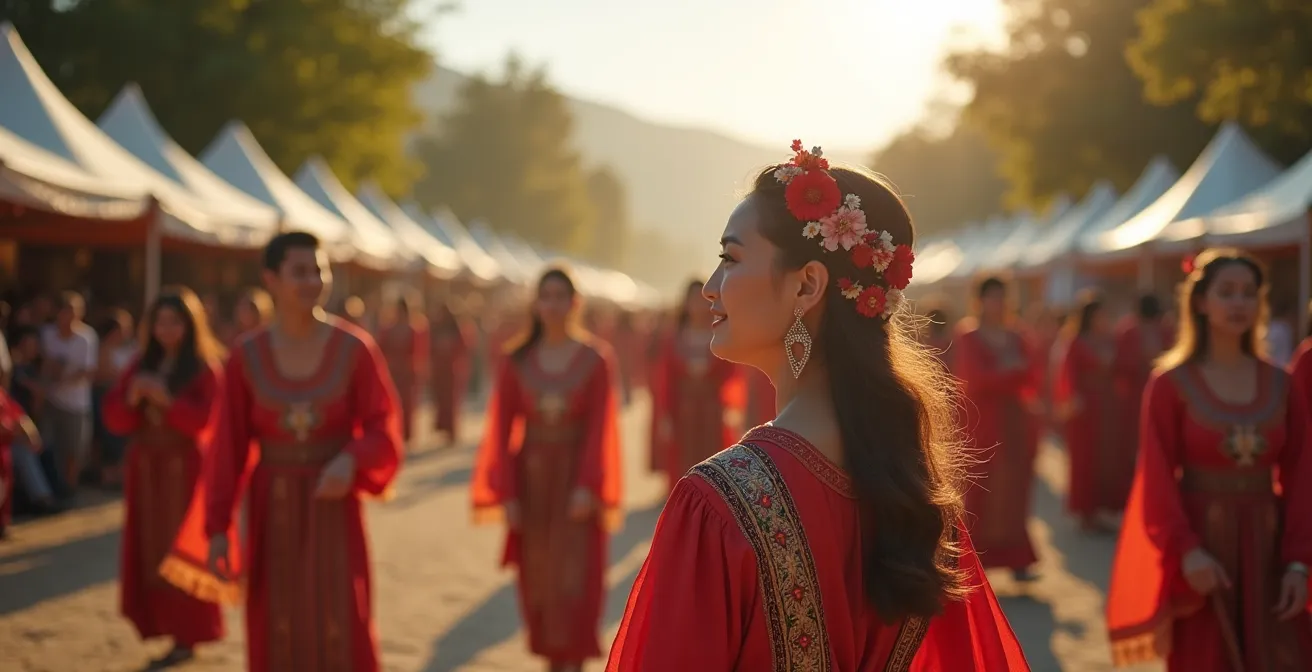
The key is to ask: “Does my costume mock, generalize, or sexualize a group of people?” If the answer is yes, or even maybe, it is not an acceptable choice. A culture is a living, breathing entity, not a mask to be put on and taken off.
Engage with the spirit of creativity by inventing a character or concept, rather than borrowing and diminishing the real-life identity of others.
The “Meishi” exchange mistake that ruins your first impression instantly
To truly understand the depth of respect required in cultural exchange, we can look to an unlikely but powerful analogy: the Japanese business card, or meishi. In Western business culture, a card is often casually exchanged, pocketed without a glance, or written on. In Japan, this would be a deeply offensive act. The exchange of meishi is a formal ritual. The card is presented with two hands, received with two hands, studied carefully, and placed respectfully on the table for the duration of the meeting. It is treated as an extension of the person themselves.
This “mistake”—treating a business card as a disposable object rather than a symbol of identity—is precisely the error made in cultural appropriation. We take a cultural element, a piece of a community’s identity, and treat it casually, without understanding or performing the “ritual” of respect that it requires. We pocket the aesthetic without honoring the person it represents. Any kind of cultural element, whether an embroidery technique or a traditional garment, holds a story and a value. As one publication notes, “when fashion interprets culture, it has to, in some way, uphold the values of that reference as well.”
This is the core of the “Ritual of Exchange” framework. We must handle cultural elements with the same reverence as one would handle a meishi in a Tokyo boardroom. This means receiving them with full attention, understanding their context, and treating them as an extension of a living identity, not as a disposable piece of paper or fabric. The following checklist, inspired by this “two-handed” rule, provides a tangible guide for this respectful engagement.
Your Action Plan: The Two-Handed Rule for Cultural Engagement
- Receive with Both Hands: Give your full attention to understanding the context, history, and significance of the cultural element. Don’t just glance at the surface aesthetic.
- Study the Details: Acknowledge the skill, labor, and meaning woven into the object. Ask who made it and what story it tells.
- Handle with Respect: Treat the cultural object as an extension of a person’s or community’s identity. Do not alter, deface, or trivialize it.
- Give Credit with Both Hands: Provide full, generous, and specific attribution to the source community, guiding others to learn from and support them directly.
- Ensure Reciprocity: Ensure the exchange is not one-sided. How does your use of this element benefit its originators, whether through compensation, collaboration, or amplification?
By applying this mindset, we shift from a paradigm of taking to one of honorable, two-way dialogue, instantly elevating our engagement from potentially offensive to deeply respectful.
The 3 questions that reveal if a vendor actually made the product
As a consumer, you hold immense power in combating cultural appropriation. One of the most direct ways to exercise this power is by verifying the authenticity of the products you buy. Mass-produced items marketed as “tribal” or “boho” are often the result of appropriation, where a design has been lifted without permission or compensation. To avoid contributing to this harmful cycle, you must become a more discerning investigator. Your questions can cut through deceptive marketing and reveal whether a vendor has a genuine connection to the culture they are selling.
True artisans and ethical collaborators will not only welcome your questions but will be proud to answer them. They have a deep connection to their work and are eager to share its story. A vendor who is evasive, vague, or cannot answer these fundamental questions is a significant red flag. It likely means they are merely a reseller of appropriated designs, with no real link to the community of origin. This investigative process is a practical application of the “Ritual of Exchange,” ensuring you are engaging with an authentic story, not a hollow replica.
To aid in this process, the Cultural Intellectual Property Rights Initiative has worked on creating resources like digital databases to protect designs, fostering a system where brands can engage in respectful, royalty-based collaborations. As a consumer, you can support this movement by asking the right questions before you purchase:
- Question 1 – The Story Test: “Can you tell me the story behind this specific pattern and its cultural symbolism?” An authentic maker will know the history and meaning.
- Question 2 – The Community Test: “Which specific community or family of artisans does this work directly support?” A connected vendor can name the people and place.
- Question 3 – The Process Test: “Could you show me any photos or videos of the actual creation process?” Ethical sellers often document their collaborations to showcase the craftsmanship.
By making these questions a standard part of your shopping practice, you shift from being a passive consumer to an active ally, demanding transparency and ensuring your money supports appreciation, not appropriation.
Key Takeaways
- The line between appreciation and appropriation is defined by power, profit, and permission, not just intent.
- Ethical engagement requires moving beyond simple credit to direct compensation and true collaboration with source communities.
- Sacred symbols tied to faith or honor are not aesthetic choices; using them outside their intended context is inherently disrespectful.
How to Master Intercultural Dialogue When Moving to Japan for Work?
Mastering intercultural dialogue, whether in a Japanese workplace or in the global marketplace of fashion, is not about memorizing a list of rules. It is about cultivating a deep-seated mindset of respect, humility, and curiosity. The principles that prevent a business card faux pas in Tokyo are the very same ones that prevent an act of cultural appropriation on a runway in Paris. It all comes down to recognizing the symbolic weight of objects and actions within a given culture.
Appropriation, in its most damaging form, occurs when there is a direct and negative economic impact on the original creator. As designer Namrata Joshipura states, when the use of aesthetics “economically impacts the original creator directly, such as copying a specific style, then this takes on a sinister dimension.” This is where the dialogue breaks down. It ceases to be an exchange and becomes theft. The mastery of this dialogue, therefore, lies in ensuring the exchange is always reciprocal and never parasitic.
The hopeful path forward lies in the growing power of the conscious consumer and the ethical designer. As research into consumer behavior indicates, a rising awareness of environmental and ethical issues is prompting brands to adopt more responsible and transparent practices. This momentum is creating a new industry standard where collaboration, compensation, and deep storytelling are not just valued, but expected. By embracing the “Ritual of Exchange” framework, we can all contribute to this positive shift, ensuring that fashion’s engagement with global cultures is a source of mutual enrichment, not one-sided exploitation.
To put these principles into practice, the next step is to consciously evaluate your own wardrobe and purchasing habits. Start by asking the three essential authenticity questions before your next purchase, and commit to supporting brands and artisans who engage in a true, respectful dialogue.