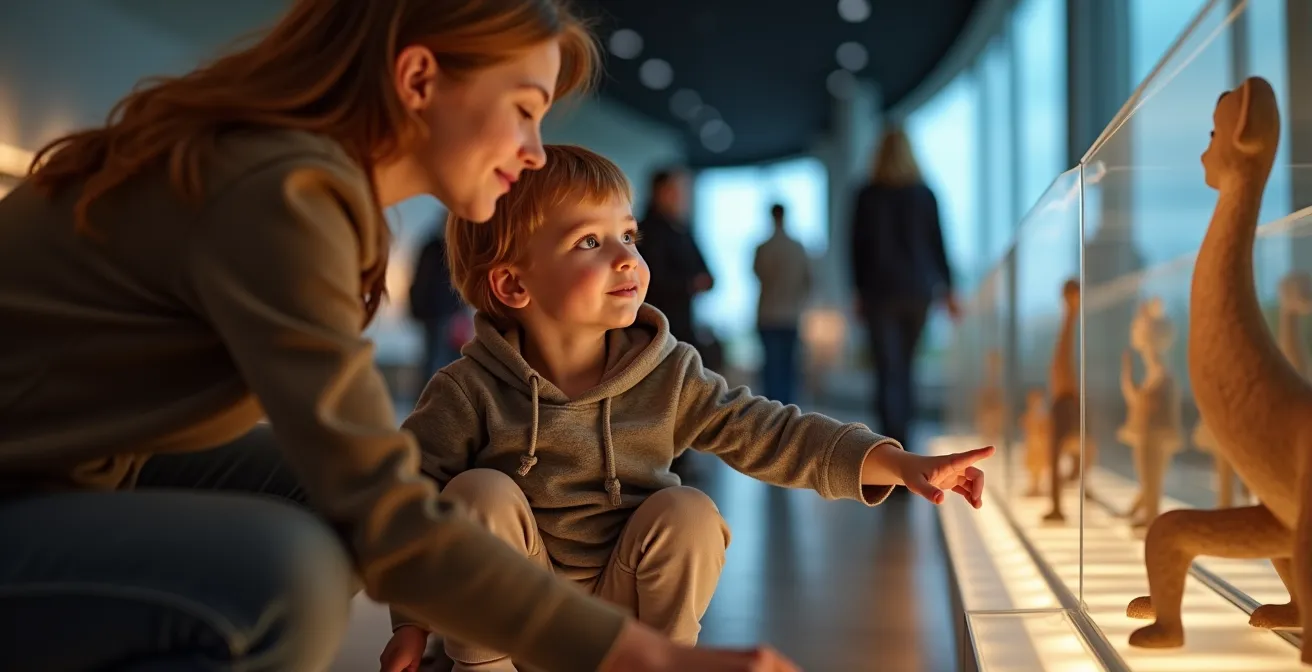
The secret to a successful museum trip isn’t just picking the right museum; it’s changing your role from “tour guide” to “game master.”
- Transform the visit into a series of fun, achievable missions instead of an overwhelming cultural lesson.
- Proactively manage your child’s “sensory budget” to prevent overload, and plan your exit to end on a high note.
Recommendation: Before your next visit, spend 10 minutes reframing the trip as a character-driven quest. This small shift in preparation yields massive returns in engagement.
You see the magnificent museum entrance, imagining a day of cultural enrichment. Your child sees a giant, quiet building full of things they can’t touch. The familiar dread sets in: the countdown to the first “I’m bored,” the fidgeting, the whining, and the eventual, inevitable meltdown in a gallery of priceless artifacts. Parents are often told the solution lies in logistics: go when the kids are fed and rested, bring snacks, and don’t stay too long. While practical, this advice misses the core of the problem. It treats the child as a potential crisis to be managed, not an explorer to be engaged.
But what if the entire approach was flawed? What if the key to a joyful, meltdown-free museum visit wasn’t about better management, but better game design? The real secret lies in shifting your role. Stop being a frustrated tour guide, dragging your family through a checklist of “important” objects. Instead, become a Game Master—the architect of a grand adventure, the weaver of stories, and the keeper of quests. This transforms the museum from a passive hall of objects into an interactive playground for the mind.
This guide provides a practical playbook to make that shift. We’ll explore strategies to build excitement before you even leave the house, design engaging “missions” that captivate young minds, and understand the simple cues that tell you when to declare victory and head for the gift shop. It’s time to trade tantrums for treasure hunts and turn your next museum day into an experience the whole family will remember fondly.
To help you navigate this new approach, this article is structured as a series of strategic “levels” you can master. Explore the topics that matter most to you or follow them in order to build your complete museum game plan.
Summary: A Game Plan for Visiting Museums with Children
- Scavenger Hunt vs. Audio Guide: Which keeps a 7-year-old engaged longer?
- How to use storytelling to build excitement for a specific exhibit?
- The itinerary mistake that leads to sensory overload after 45 minutes
- How to locate “touch-allowed” sections in strict fine art museums?
- When to leave the museum to ensure the memory remains positive?
- How to “chunk” assignments to prevent executive dysfunction paralysis?
- The flash photography mistake that fades ancient pigments over time
- How Travelers Can Actively Participate in Protecting Monuments During Visits?
Scavenger Hunt vs. Audio Guide: Which keeps a 7-year-old engaged longer?
The moment you enter a gallery, you’re faced with a choice for engagement: the high-tech allure of an audio guide or the classic fun of a scavenger hunt. For parents of young children, the decision is critical. While an audio guide seems educational, it often demands a level of passive listening that is challenging for kids. Instead, framing the visit as a quest for specific objects taps directly into a child’s natural love for games and discovery. In fact, research from 2023 indicates that children aged 5-8 show far more sustained engagement when given concrete search tasks. The active process of “finding” trumps the passive act of “listening.”
As a Game Master Parent, your goal is to promote active participation. A scavenger hunt turns your child into the hero of the story—a detective or an explorer on a mission. An audio guide, by contrast, can feel like a lecture, quickly depleting their limited “sensory budget.” The key is tailoring the hunt to their interests. If they love dinosaurs, hunt for fossils or animals in paintings. If they love the color blue, search for every shade you can find. This simple shift makes the experience personal and exciting.
This table breaks down why a hands-on, active approach is often the winning strategy for keeping younger children happily engaged.
| Aspect | Scavenger Hunt | Audio Guide |
|---|---|---|
| Engagement Type | Active search & discovery | Passive reception |
| Cognitive Load | Focused on few key details | Can be overwhelming with facts |
| Personalization | Easily tailored to child’s interests | One-size-fits-all narrative |
| Physical Activity | Encourages movement & exploration | Often requires standing still |
| Ideal Age Range | 5-10 years | 8+ years |
Ultimately, choosing the scavenger hunt is choosing an interactive game over a passive documentary. It empowers your child, encourages movement, and sets a playful tone for the entire visit, making it the superior tool for your game master toolkit, especially for the under-10 crowd.
How to use storytelling to build excitement for a specific exhibit?
The magic of a museum visit doesn’t start at the ticket counter; it begins days before, in the stories you tell. Simply announcing “we’re going to the museum” can be met with a groan, but announcing “we’re going on a quest to find the queen’s secret jewels” sparks immediate curiosity. As the Game Master, your most powerful tool is narrative. By weaving a story around a few key artifacts, you transform them from static objects into central characters and clues in an exciting adventure. A 2023 study confirmed that children experiencing exhibits through storytelling showed significantly better recall and emotional connection, even creating their own narratives to make sense of the artifacts.
The goal is to provide a “story trailer” before the main event. Pick one or two objects from the museum’s website and build a simple, compelling narrative. This front-loading of imagination gives your child a personal stake in the visit. They aren’t just going to see old things; they’re going to meet the characters, solve the mystery, or complete the mission you’ve created together. This anticipatory excitement is the best defense against on-site boredom.
To craft your pre-visit narrative, use the “Character-Conflict-Quest” framework. It’s a simple and effective way to build a compelling story:
- Identify the Character: “This isn’t just a suit of armor; it belonged to a knight who had to protect a dragon.”
- Establish the Conflict: “But an evil wizard cast a spell on his castle, and he had to leave in a hurry.”
- Define the Quest: “Our mission is to find his shield and sword so he can one day return to his home.”
- Connect to their World: “Did you know this dinosaur roamed the land right where our city is now? We’re going to find its giant tooth!”
On the day of the visit, the story acts as your map. Instead of wandering aimlessly, your family has a clear objective. Finding the object becomes a triumphant moment, the climax of the story you started, ensuring the memory is one of adventure and discovery, not exhaustion.
The itinerary mistake that leads to sensory overload after 45 minutes
One of the most common traps for parents is the “we have to see it all” mindset. This marathon approach treats a museum like a checklist, but for a child, it’s a direct path to sensory overload and a guaranteed meltdown. Children’s brains are not wired for hours of quiet observation. Their “sensory budget” is limited, and once it’s spent, the fun is officially over. Most museum educators recommend that 45 minutes is the optimal museum visit duration for children under 8 before fatigue and overstimulation set in. Ignoring this limit is the single biggest itinerary mistake a parent can make.
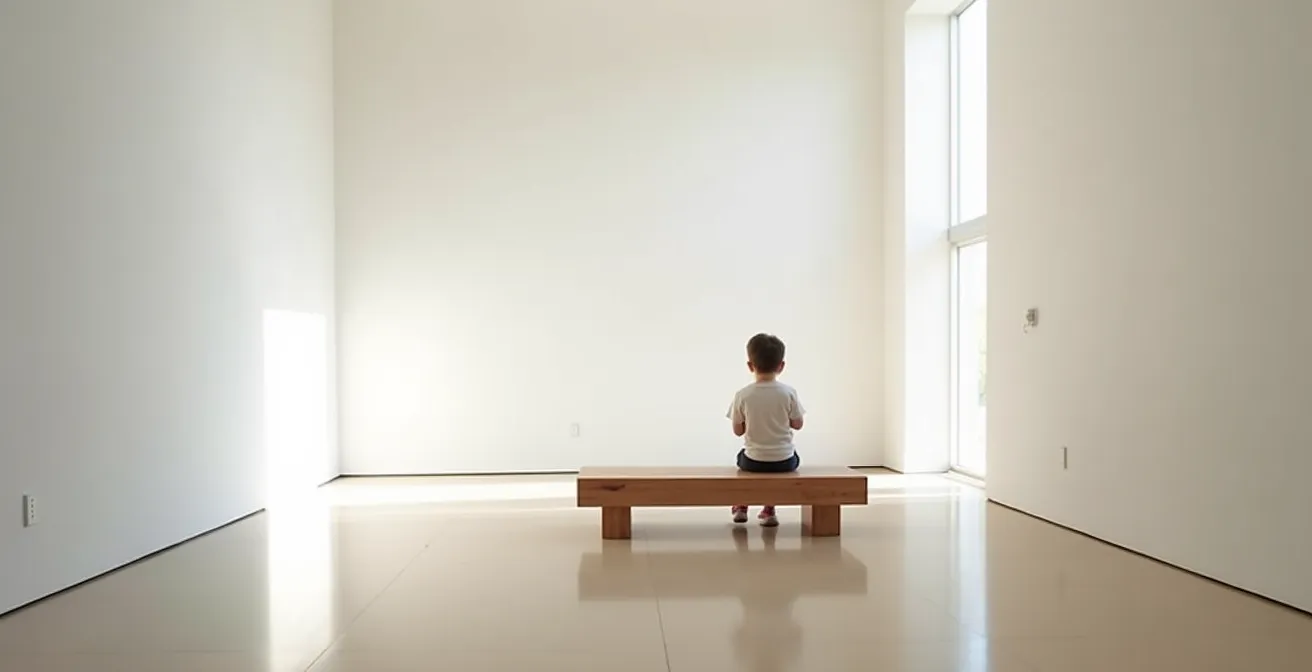
As you can see, a planned pause in a quiet corner isn’t a sign of failure; it’s a strategic “recharge zone.” A successful Game Master Parent knows how to manage their player’s energy. Instead of a death march through every gallery, plan a short, focused “sprint.” Choose one wing, one exhibit, or even just three to five key objects for your mission. The goal is depth over breadth. A deep, joyful 45-minute engagement with a handful of artifacts is infinitely more valuable than a two-hour blur of forgotten galleries.
Watch for the early warning signs of a depleted sensory budget. The “first yawn” is a critical signal. It doesn’t mean your child is bored or tired; it’s a neurological cue that their brain is overwhelmed. When you see it, you know you have about 15 minutes left before things go south. This is your cue to initiate the exit plan. Offering structured choices like, “Do you want to see the giant whale skeleton or the shiny rock collection next?” also helps prevent the paralysis of too many options. This respects their autonomy while keeping the itinerary on track.
By planning a short visit and scheduling mandatory breaks for snacks or quiet time, you stay in control of the experience. You aren’t cutting the trip short; you are ending the game on a high score, ensuring the dominant memory is one of excitement, not exhaustion.
How to locate “touch-allowed” sections in strict fine art museums?
The command “Don’t touch!” is the unofficial soundtrack to many family museum trips, especially in fine art galleries. For young, tactile learners, this rule is torture. It goes against their primary method of understanding the world. However, even the strictest museums often have hidden gems of interactivity. As a Game Master Parent, your mission is to find these “bonus levels” where hands-on exploration is not only allowed but encouraged. The key is knowing where and how to look.
Your first stop should always be the information or family desk. Don’t just ask if there’s a “kids’ area.” Frame your request specifically: “I’m here with a tactile learner. What are the best opportunities for them to have a hands-on experience?” This signals to the staff that you’re an informed and engaged parent, and they are more likely to point you toward discovery carts, activity backpacks, or dedicated family rooms that may be poorly signposted. Many museums are investing in these spaces, and your direct question is the key to unlocking them.
Case Study: The British Museum’s Family Program
A brilliant example of this in action is the British Museum. Beyond its priceless artifacts, the museum offers activity backpacks and Museum explorer trails on weekends. Dedicated Family Desks are staffed by facilitators who can direct families to specific hands-on opportunities. They also understand that the building itself can be part of the tactile experience, pointing out architectural features that are safe to touch. Their success in attracting over 170,000 visitors to a new discovery play space in 2023 shows a clear commitment to engaging tactile learners even in a world-class institution.
Beyond official zones, get creative. The building itself is an exhibit. Feel the texture of a cool marble staircase, the weight of a bronze door handle, or the rough surface of an exterior stone wall. You can also bring your own “tactile toolkit.” A small piece of silk can be used when looking at paintings of elegant dresses, or a smooth, heavy stone can be held while observing a sculpture. This gives your child a physical sensation to connect with the art without breaking any rules.
s
By shifting your perspective from “what can’t we touch?” to “what can we experience with our senses?”, you open up a new dimension of the museum, satisfying your child’s need for physical engagement and keeping them happily involved in the adventure.
When to leave the museum to ensure the memory remains positive?
Perhaps the most strategic decision a Game Master Parent makes is not what to see, but when to leave. Many visits are ruined in the last 30 minutes, when a child’s “sensory budget” is overdrawn, and fun descends into frustration. The goal is to end the game on a high score, cementing the museum as a place of wonder, not a place of exhaustion. This requires applying a psychological principle known as the Peak-End Rule, which states that people judge an experience largely based on how they felt at its peak (most intense point) and at its end.
Your mission is to engineer a positive end. This means you must leave *before* the whining starts, not because of it. You need to identify a “peak moment”—that instance of pure, unprompted awe when your child is genuinely fascinated by an artifact. Maybe it’s a towering dinosaur skeleton, a shimmering suit of armor, or a painting full of funny animals. Once you’ve hit that peak, the clock starts. You should plan to leave within the next 20-30 minutes, while their energy and excitement are still high.
This idea is best captured by an expert who sees this dynamic play out every day. As Seattle Art Museum Docent David Turner wisely advises:
The key is to leave just after a peak positive moment, not waiting for the decline. When your child is bursting with excitement about something, that’s the cue.
– David Turner, Docent Tips: How to Visit a Museum with a Child
To execute this strategy, the departure must be pre-planned and framed positively. Discuss the exit as part of the initial game plan: “First, we’ll find the knights, then we’ll have a snack, and then we’ll visit the gift shop before heading home.” This creates a predictable and non-negotiable sequence. When it’s time to go, you’re not cutting the fun short; you’re simply proceeding to the next level of the adventure. This prevents the “just one more thing” negotiation that so often leads to a meltdown.
On the way home, curate the memory. Instead of the generic “Did you have fun?”, ask specific, playful questions like, “What was the biggest thing you saw?” or “What was the silliest painting?” This reinforces the positive peaks of the visit, ensuring that the final, lasting memory is one of joy and discovery.
How to “chunk” assignments to prevent executive dysfunction paralysis?
For many children, especially those with executive function challenges, the vastness of a museum can be completely paralyzing. The unspoken “assignment” to “see the museum” is too big, too abstract, and too overwhelming. This is where the Game Master Parent’s most important skill comes into play: chunking. Chunking is the art of breaking down a massive, intimidating task into a series of small, concrete, and achievable mini-missions. This strategy short-circuits the brain’s “fight or flight” response to being overwhelmed and replaces it with a motivating sense of progress.
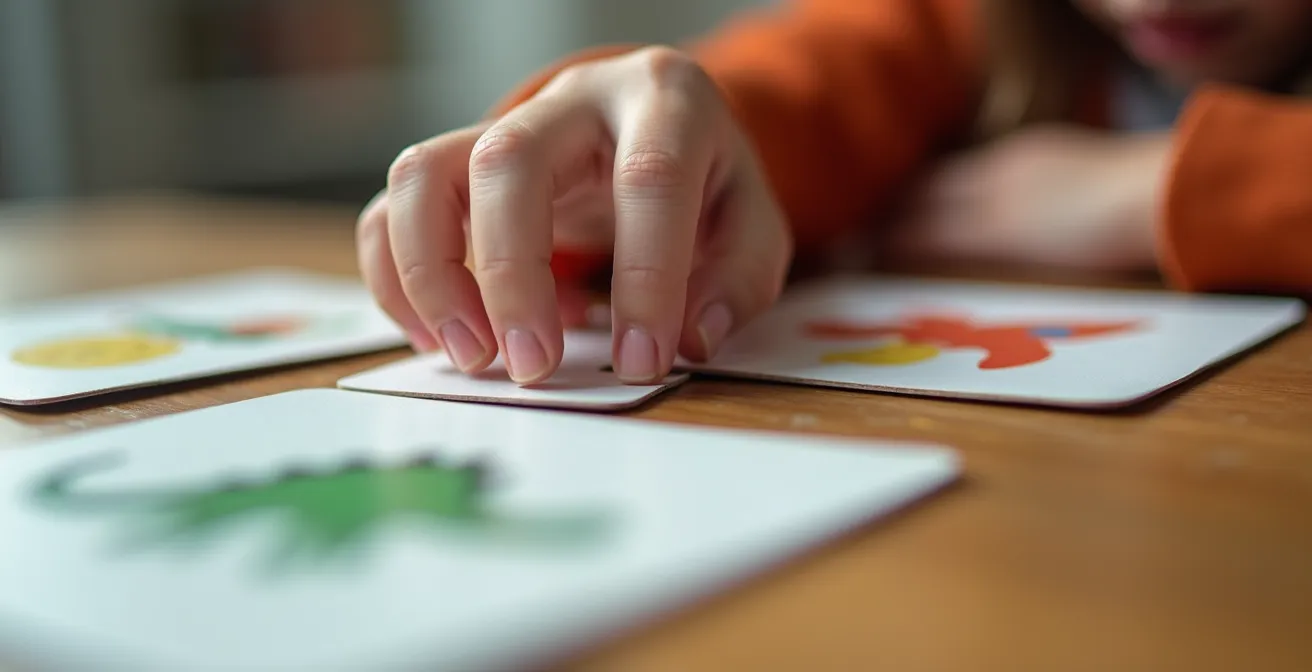
Instead of a single, daunting goal, you create a “level-based” game. A visual schedule, using simple picture icons, can be a powerful tool. It makes the plan tangible and gives the child a sense of control as they physically move an icon from the “To-Do” column to the “Done” column. The feeling of completing a level and moving on to the next provides a dopamine hit that fuels further engagement. This is not about rushing through the museum; it’s about providing a clear, predictable structure that frees up mental energy for curiosity and wonder.
Each “chunk” or “mission” should be achievable within 5-10 minutes. It’s also effective to define chunks by sensory input, not just by gallery. For example, a mission could be “Spend 10 minutes in the loud, echoing dinosaur hall,” followed by the next mission, “Find a quiet bench for a 5-minute snack and water break.” This proactive management of stimulation is key to preventing the slide into sensory overload. The goal is to create a rhythm of engagement and rest.
Your Action Plan: Turning the Visit into Gamified Missions
- Reframe the visit as ‘Levels,’ not tasks: “Level 1: Find the museum map. Level 2: Navigate to the Egyptian wing.”
- Create a visual schedule with 3-4 picture icons that can be moved to a ‘Done’ column.
- Use Time-Boxing: Set a visual timer for “10 minutes in this room” to create clear boundaries.
- Define chunks by sensory input: Plan a “noisy room” mission, followed by a “quiet bench” mission.
- Implement ‘First/Then’ boards for younger children: “First, we see the dinosaurs, then we get a snack.”
By transforming the visit into a series of small wins, you empower your child. They are no longer a passive passenger on your cultural tour; they are an active player, leveling up with each mission accomplished. This sense of agency is the ultimate antidote to paralysis and the foundation of a truly successful museum adventure.
The flash photography mistake that fades ancient pigments over time
The “No Flash Photography” rule is one of the most common signs in any museum, yet it’s often perceived as a frustrating, arbitrary restriction. For a child, being told “don’t” without a compelling “why” is an invitation to test boundaries. To prevent this conflict, a Game Master Parent reframes the rule as an important mission: the mission to be an “Art Protector.” This shifts the child’s role from a potential rule-breaker to a responsible guardian of history.
The first step is explaining the “why” in a way a child can understand. Forget complex discussions of light degradation. Use a powerful, simple analogy. As conservation experts explain, each camera flash acts like a tiny, invisible sunburn on a painting or artifact. One flash might not do much, but thousands of flashes over the years cause the delicate, ancient colors to permanently fade. You can tell your child, “The artist wanted us to see these exact, amazing colors. Our job as Art Protectors is to make sure kids 100 years from now can see them, too.”
This narrative transforms the rule from a negative constraint to a positive, empowering role. The challenge is no longer about *not* using the flash; it becomes about mastering a new skill: taking a great photo in low light by holding the camera “super still.” You can even turn it into a game. This “do” is always more effective than “don’t.”
Here’s how to enlist your child as a fellow Art Protector:
- Use the Sunburn Analogy: “Each flash gives the painting a tiny ouchie we can’t see.”
- Introduce the ‘Sleeping Colors’ Idea: “The colors are sleeping so they don’t get tired. A bright flash is like a loud alarm that wakes them up and wears them out.”
- Teach the 3-Foot Bubble Rule: “Imagine you’re in a magic bubble. Your bubble can get close to the art, but it can never touch!”
- Model the Behavior: Loudly announce, “Okay, I’m turning my flash off to protect the art!” Show them how Art Guardians act, and they will want to follow your lead.
By giving your child a noble purpose, you replace a potential power struggle with a collaborative mission. They are no longer just a visitor; they are a vital part of the museum’s conservation team, a proud protector of history for everyone to enjoy.
Key Takeaways
- Shift your mindset from tour guide to Game Master; your primary role is to facilitate fun, not deliver facts.
- A successful visit is short, focused, and ends on a high note. Prioritize a positive memory over seeing everything.
- Empower your child with a role—explorer, detective, or guardian—to transform passive viewing into active participation.
How Travelers Can Actively Participate in Protecting Monuments During Visits?
The ultimate level-up for a young museum-goer is transcending the role of a mere visitor to become an active guardian of the treasures they are seeing. This is the final and most profound mission you can assign as a Game Master Parent. It instills a sense of respect and responsibility that extends far beyond the museum walls. The mindset shift is from “guest” to “guardian,” transforming your child from a potential problem into part of the solution. This begins before you even step inside, with a “Guardian Huddle.”
s
The Guardian Huddle is a brief, 2-minute pre-game meeting where you establish the core rules of being a protector. At the Museum of the American Revolution, they successfully use this technique by teaching kids two simple rules: “hands have magic oils that can harm old things” (so we only touch with our eyes), and “quiet voices protect sleeping artifacts.” These simple, imaginative explanations are far more effective than a list of “don’ts.” You can also introduce the “Leave It Better” challenge: as a family, you will do one small thing to improve the museum, like picking up a stray piece of litter or giving a compliment to a docent.
This guardian identity empowers your child to become a positive influence. When they see other kids leaning on a display case, they won’t want to copy them; they’ll feel a sense of pride in knowing the right way to act. You can reinforce this by teaching them the “shadow rule”—a fun game to keep a safe distance by ensuring their shadow only falls on the floor, never on the walls or artifacts. It turns the abstract concept of respectful distance into a concrete, playful action.
By practicing these guardian behaviors, such as using a “museum voice” and “eyes-only touching,” your child learns that they are a key player in the preservation of history. They are not just looking at treasures; they are helping to protect them for future generations of kids. This sense of purpose is the most powerful souvenir they can take home.
Your next museum adventure is waiting. Use this playbook to design your game, create your quests, and lead your family on a mission of discovery. Plan your next visit today and start building a lifetime of positive, joyful, and meltdown-free cultural experiences.