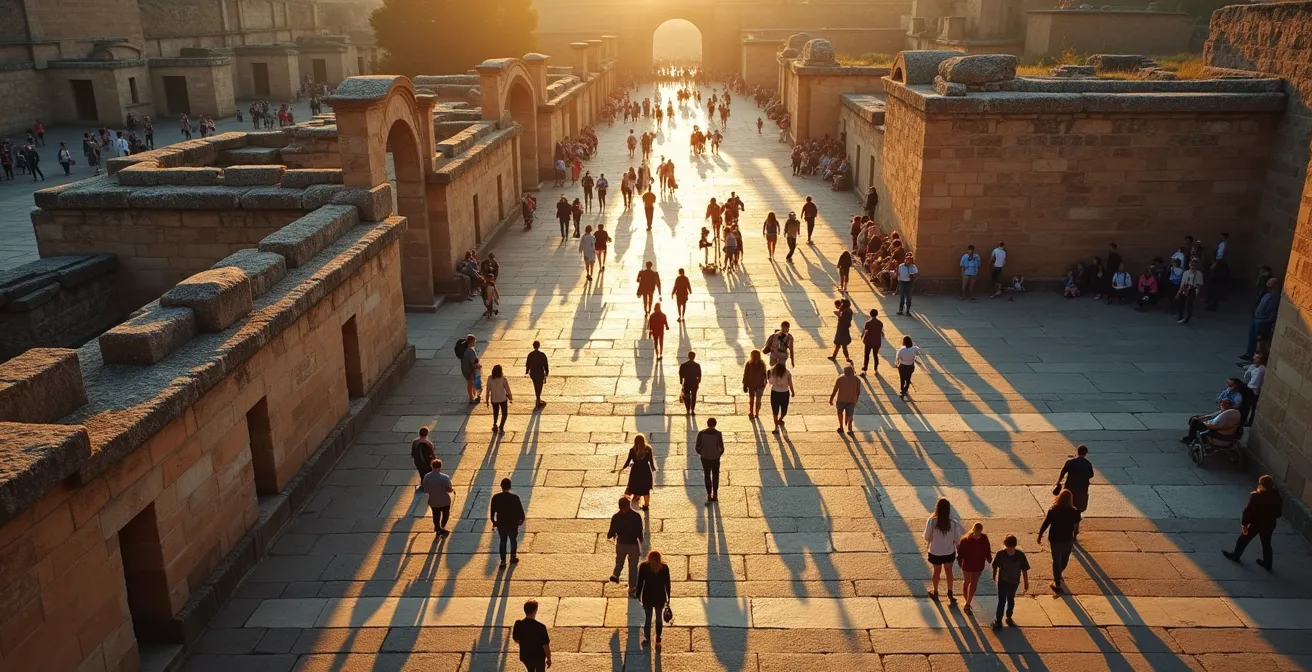
The greatest threat to Europe’s ancient monuments isn’t a single act of vandalism, but the cumulative, invisible impact of millions of well-intentioned visitors.
- Your footsteps and camera flash cause more quantifiable damage over time than natural erosion.
- Choosing less-traveled sites and visiting during off-peak hours are the most effective acts of preservation.
Recommendation: Shift from a passive tourist to an active steward by understanding the science of decay and making informed choices during your visit.
Standing before the Parthenon or walking the cobbled streets of Pompeii is a profound experience, a tangible connection to millennia of human history. As a responsible traveler, you feel a deep respect for these irreplaceable treasures. You see the signs warning of overcrowding, the barriers to protect fragile structures, and the general sense of a destination straining under the weight of its own popularity. You follow the rules, keep your distance, and assume you are doing your part.
But what if the most significant damage isn’t caused by the obvious rule-breakers? What if the real threat is far more subtle, a form of invisible erosion enacted by millions of visitors just like you? The truth is, the collective impact of our presence—the pressure of our footsteps, the light from our cameras, even the moisture from our breath—contributes to a slow, silent decay that no sign can adequately warn against. This is the paradox of modern travel: our love for history is accelerating its demise through a thousand tiny, seemingly harmless actions.
This guide moves beyond the familiar advice. It will not simply give you a list of prohibitions. Instead, it will pull back the curtain on the hidden science of heritage degradation. By understanding the physics of abrasion, the chemistry of light damage, and the economics of preservation, you will learn to see these sites not as a backdrop for a vacation, but as fragile ecosystems you have the power to protect. We will explore how to transform your role from a passive consumer of history into an active, conscious steward, ensuring these wonders survive for generations to come.
This article delves into the specific, often surprising, ways tourism impacts ancient sites and provides actionable strategies for becoming part of the solution. Explore the sections below to understand the real challenges and discover how you can make a meaningful difference.
Summary: The Unseen Vandals: How Your Visit Is Silently Eroding Europe’s Ancient Sites
- Why your sneakers are more dangerous to mosaics than weather erosion?
- Machu Picchu vs. Choquequirao: Why the harder trek saves heritage?
- The flash photography mistake that fades ancient pigments over time
- How to ensure your entrance fee actually funds site restoration?
- The line between keeping a dance alive and turning it into a tourist show
- Why visiting the Acropolis at 8 AM saves the stones and your sanity?
- When to move your watercolor painting to avoid UV fading?
- How Travelers Can Actively Participate in Protecting Monuments During Visits?
Why Your Sneakers Are More Dangerous to Mosaics Than Weather Erosion?
We tend to think of erosion as a grand, slow process driven by wind and rain over centuries. Yet, at archaeological sites, a far more aggressive force is at play: the soles of our shoes. A single footstep may seem insignificant, but the physics of pressure tells a different story. While standing, a person exerts a certain ground pressure. When walking or running, that force concentrates and intensifies dramatically. Research into ground pressure physics reveals that a walking human exerts more than double their standing pressure, a force that can spike to over 500 psi when running.
Now, multiply that force by thousands, or even millions, of visitors each year. Each step on an ancient Roman mosaic or a 2,000-year-old stone threshold acts like a tiny hammer blow. The abrasive materials in modern shoe soles grind away at surfaces, dislodging the delicate tesserae of a mosaic and wearing down stone that has withstood millennia of natural weathering. This is the principle of cumulative impact in action. It’s not one person’s visit that causes the damage; it’s the relentless, concentrated traffic that transforms a path into a groove and a floor into dust.
This mechanical abrasion is a form of invisible erosion—a process too slow to perceive on a single visit but devastating over the course of a decade. It’s a direct conflict between access and preservation. To combat this, heritage managers are forced into difficult compromises. In 2023, Athens began capping daily visitors to the Acropolis at 20,000, not just to manage crowds but to reduce the sheer physical wear on the site’s surfaces, which saw over 4.5 million visitors in 2024. Understanding this turns a simple choice, like staying on designated walkways, from a suggestion into a vital act of conservation.
Machu Picchu vs. Choquequirao: Why the Harder Trek Saves Heritage?
The story of Machu Picchu is a powerful cautionary tale about what happens when a site is loved to death. As Peru’s most famous landmark, it was never designed for the crushing weight of modern tourism. The constant foot traffic, unregulated for decades, has led to significant degradation. Heritage conservation experts have documented how monuments like the sacred Intihuatana sundial sustained severe damage from the sheer number of people touching and leaning against it. The site’s popularity became its greatest threat, forcing authorities to implement strict ticketing, time slots, and one-way circuits to mitigate the damage.
This illustrates a critical concept in preservation: carrying capacity. Every site has a physical and ecological limit to the number of visitors it can sustain before irreversible harm occurs. When demand far exceeds this capacity, the result is overtourism. The solution, however, isn’t always to simply build more infrastructure to accommodate more people. Sometimes, the best protection is difficulty of access itself.
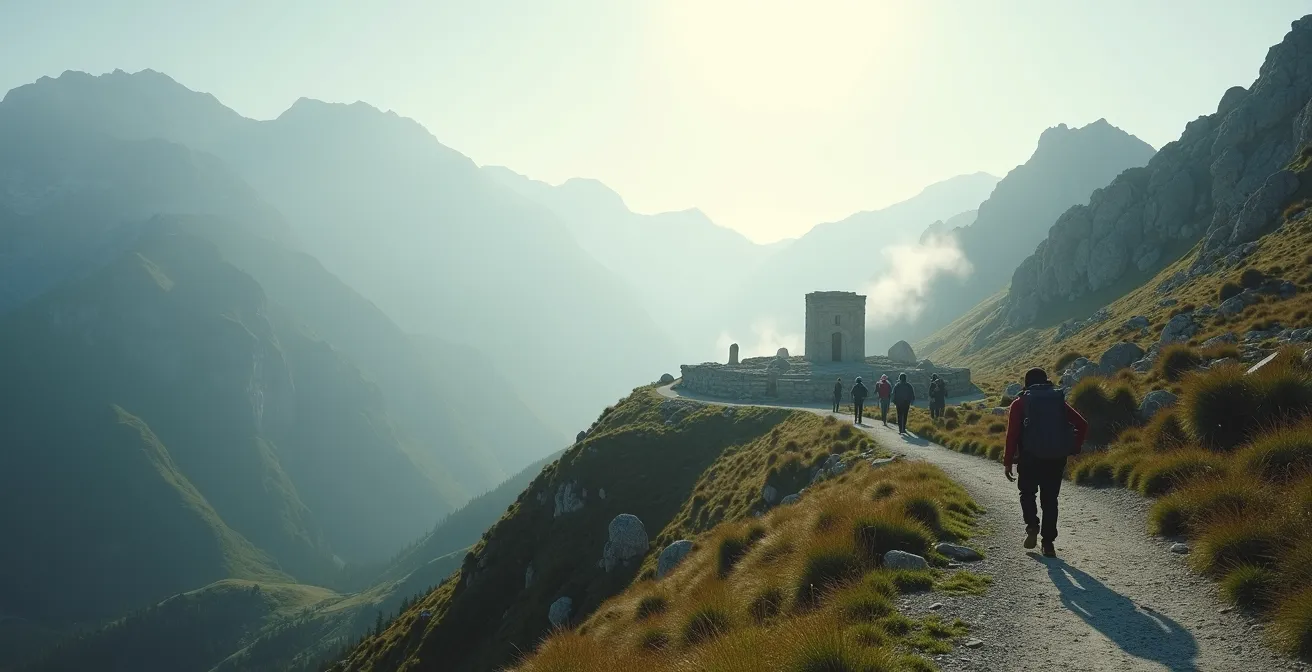
Enter Choquequirao, often called Machu Picchu’s “sacred sister.” It is a similarly vast and spectacular Inca citadel, yet it receives only a tiny fraction of the visitors. The reason? It’s only accessible via a challenging, multi-day trek. This natural barrier acts as a filter, ensuring that those who arrive have invested significant effort and are often more mindful of their impact. The difficulty of the journey inherently enforces a low carrying capacity, preserving the site’s integrity and offering a more authentic, less crowded experience. This contrast teaches us a vital lesson in intentional travel: sometimes, choosing the harder path is the most profound act of preservation.
The Flash Photography Mistake That Fades Ancient Pigments Over Time
The “No Flash Photography” rule in museums and tombs often feels like a minor, almost arbitrary, suggestion. But behind this simple prohibition lies the complex science of photochemical degradation—another form of invisible erosion. The intense burst of light from a camera flash, especially its ultraviolet (UV) and infrared components, is a powerful catalyst for chemical reactions. Over time, these repeated bursts of energy break down the molecular bonds in ancient pigments, causing them to fade, discolor, or even disintegrate.
This isn’t a theoretical risk. Scientific studies have shown just how rapid and destructive this process can be. In an extreme example, photochemical degradation research revealed that damaging Arsenolite crystals form within 2 weeks of UV-B light exposure on certain ancient pigments. While a single flash is less intense, the cumulative effect of thousands of flashes per day over years amounts to a significant dose of high-energy radiation. This is particularly devastating for delicate organic-based paints and dyes used in frescoes, illuminated manuscripts, and textiles, which are far more fragile than mineral-based pigments.
Experts in the field confirm the danger, treating light exposure as a measurable form of damage. As one research team studying Byzantine art conservation noted, the process is well-understood:
In the museum field, photochemical damage is often assessed by measuring the surface color change resulting from light exposure, with data on fading rates extrapolated from long-term exposure to assess damage from photoflash.
– Research team from Byzantine art conservation study, MDPI Minerals Journal
Ultimately, your photograph is fleeting, but the damage it can contribute to is permanent. Resisting the urge to use a flash is a small sacrifice that directly contributes to preserving the vibrancy of ancient art for future generations. It’s a clear choice to prioritize the longevity of our shared heritage over a momentary snapshot.
How to Ensure Your Entrance Fee Actually Funds Site Restoration?
For many travelers, paying an entrance fee feels like a direct contribution to a site’s preservation. We willingly pay, assuming our money will go towards essential restoration, research, and maintenance. While tourism revenue is often a critical lifeline for heritage sites, the path from your wallet to a restorer’s toolkit is not always direct. In some cases, fees are absorbed into a general government treasury, with only a fraction being reinvested into the site itself. This creates a painful cycle where a site’s popularity generates immense revenue, but the landmark itself continues to degrade from lack of dedicated funding.
The scale of this revenue can be staggering, highlighting the importance of transparency. For instance, in 2024 alone, the Acropolis of Athens generated €128.0 million in aggregate receipts. As a conscious traveler, you have the right and the responsibility to question where this money goes. Becoming an active steward means looking for evidence that your financial contribution is making a difference. This doesn’t require an invasive investigation, but rather a habit of mindful observation and research.
True financial support for heritage requires a bit of due diligence. By taking a few extra steps, you can make more informed decisions and even direct your support to channels that guarantee its impact. This empowers you to ensure your visit is not just an extractive transaction but a genuinely supportive one.
Your Action Plan: Verifying Heritage Funding
- On-Site Information: Look for signage or displays detailing current or completed restoration projects that are explicitly “funded by visitor entrance fees.”
- Official Websites: Before your visit, check the site’s official management body website for an “annual report” or “financial transparency” section.
- Partner Organizations: Research if the site is managed in partnership with reputable international bodies like UNESCO or the World Monuments Fund, which often require financial oversight.
- Direct Donations: Consider donating to dedicated non-profit “Friends of…” societies or preservation trusts, which often guarantee 100% of donations go directly to conservation projects.
- Funding Structure: Inquire with official guides or at the information center whether entrance fees are placed in a dedicated heritage trust or go to a general government treasury.
The Line Between Keeping a Dance Alive and Turning It into a Tourist Show
The impact of mass tourism extends beyond the physical erosion of stone and pigment. It also wears away at the intangible fabric of culture itself. Living traditions, such as ceremonial dances, religious festivals, and local crafts, are often a primary draw for travelers seeking authentic experiences. However, the very act of observing can alter and dilute what is being observed. When a cultural practice becomes a product for tourist consumption, it risks a process known as “Folklorization.”
A cultural heritage expert aptly defines this phenomenon as the process of adapting a practice for an outside audience. This often involves making it more spectacular, shortening its duration, and, most critically, stripping it of its original sacred or communal context to make it more palatable and entertaining.
Folklorization is the process of adapting a cultural practice for tourist consumption through shortening it, making it more spectacular, and removing sacred elements.
– Cultural heritage preservation expert, Tourism and Heritage Management Studies
The line is incredibly fine. On one hand, tourist interest can provide the economic incentive necessary to keep a tradition alive, passing it down to younger generations. In economies heavily dependent on tourism—where the industry can account for 25 to 30 percent of a nation’s GDP as it does in Greece—the pressure to perform for visitors is immense. On the other hand, when the performance is no longer for the community but primarily for the tourist’s camera, its soul is lost. The dance becomes a show, the ceremony a reenactment. As responsible travelers, our challenge is to seek out and support experiences that are community-led and prioritize authenticity over spectacle, even if they are less polished or convenient.
Why Visiting the Acropolis at 8 AM Saves the Stones and Your Sanity?
The advice to “visit early” is one of the most common tips for any popular tourist destination, usually framed as a way to beat the crowds and get better photos. While true, this advice has a much deeper conservationist meaning. At a site like the Acropolis, arriving at the 8 AM opening is not just a strategy for a better experience; it’s a direct act of preservation that helps mitigate the intense pressures of overtourism.
The distribution of visitors throughout the day is dangerously uneven. According to Greek heritage management data, approximately half the site’s foot traffic arrives between 8 am and noon. This creates a massive “peak load” where the site’s infrastructure, staff, and the ancient stones themselves are put under maximum strain. The concentration of thousands of people in a few short hours accelerates the very mechanical abrasion we discussed earlier. Furthermore, it creates a stressful, unpleasant environment for everyone, diminishing the sense of awe that such a place should inspire.
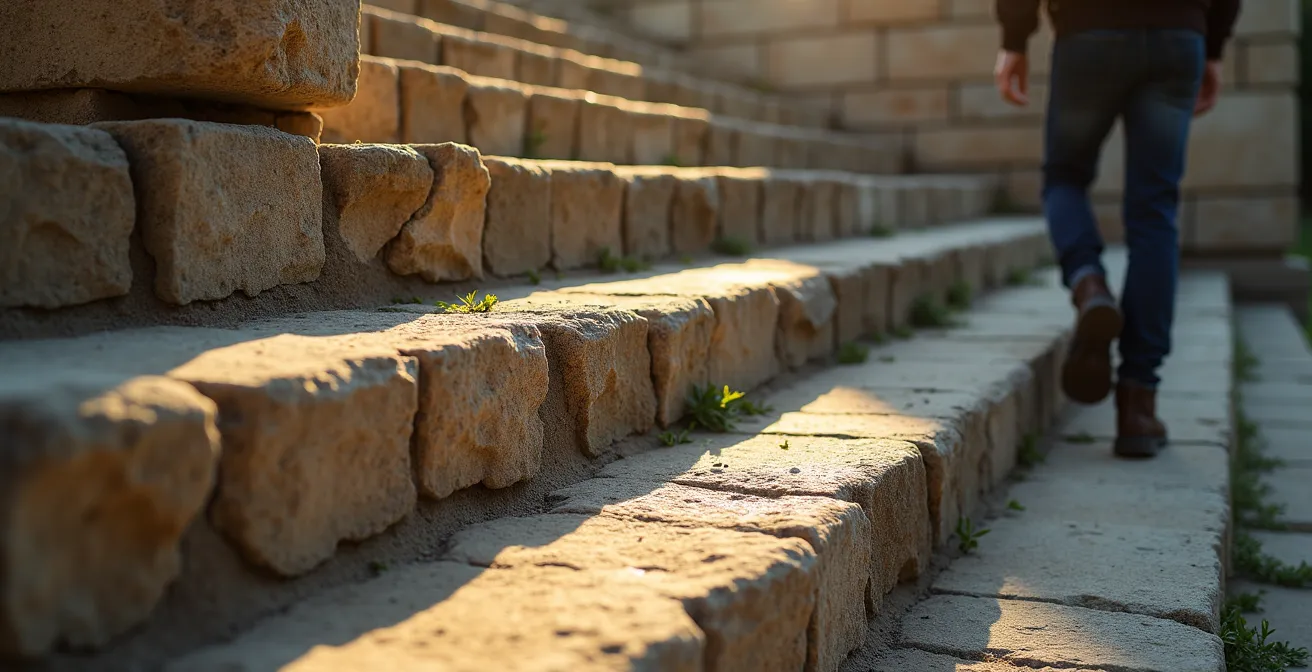
By choosing to be part of the first wave of visitors, you do more than just secure a moment of peace. You actively help to distribute the load of human traffic more evenly across the day. Your visit at 8 AM is one less person adding to the 11 AM crush. This simple choice reduces the peak-hour strain on the monument. It’s a perfect example of how a small, personal decision, when adopted by many, can have a significant collective benefit for the site’s long-term health. You save the stones from unnecessary stress, and in return, you are rewarded with a more serene, meaningful, and personal connection to history.
When to Move Your Watercolor Painting to Avoid UV Fading?
The concept of light damage may seem abstract when discussing vast stone monuments, but an analogy from our own homes makes it startlingly clear. Imagine a precious watercolor painting hanging in a sunlit room. Over years, you would expect its vibrant colors to fade. The same principle of UV degradation applies to the world’s most priceless heritage, but on a much more tragic scale. The delicate pigments in ancient artifacts are, in essence, historical watercolors painted on stone, papyrus, or wood.
This isn’t just a problem in sun-drenched outdoor sites; it is a critical issue for artifacts housed in historical buildings that lack modern climate and light control. These environments expose pigments to constant, long-term environmental stress.
Case Study: The Fading Icons of Byzantium
A study of Byzantine icons housed in historic churches revealed the devastating effect of environmental fluctuations. Unlike in a controlled museum setting, these artworks are exposed to daily and seasonal changes in light, temperature, and humidity. Researchers found that these conditions caused severe physiochemical changes in the pigments, considerably altering their color and appearance compared to their original state. The very act of keeping them in their authentic, historical context without modern protection accelerates their decay.
This example powerfully reinforces the lesson from flash photography: light is a form of energy, and energy causes change. Whether it’s a brief, intense burst from a camera or the slow, steady exposure to ambient sunlight, the cumulative dose of UV radiation is what matters. It highlights the immense challenge conservators face in balancing authenticity—keeping an object in its original setting—with the fundamental need for preservation. For the traveler, it’s a stark reminder that every source of light, natural or artificial, contributes to the irreversible fading of our shared history.
Key Takeaways
- Your seemingly harmless actions, like walking and taking photos, cause cumulative, irreversible physical and chemical damage to ancient sites.
- Preservation is a proactive choice: visiting less-crowded sites, going at off-peak times, and verifying where your entrance fee goes are powerful acts of conservation.
- Your role is not just to be a passive visitor, but to become an active steward who understands their impact and makes intentional choices to protect our shared history.
How Travelers Can Actively Participate in Protecting Monuments During Visits?
The problem of overtourism can feel overwhelming, leaving the individual traveler feeling powerless. However, shifting from a passive mindset to one of active stewardship can transform your impact. The concentration of tourism is a key part of the problem; as one McKinsey report highlighted, 80% of travellers visit just 10% of the world’s tourist destinations. Your first act of participation is to consciously step outside that 10%.
Beyond choosing less-traveled destinations, your behavior on-site is your most powerful tool. It’s about more than just following rules; it’s about embodying a spirit of care and setting a positive example for others. Each small, informed decision you make contributes to a collective culture of respect that is essential for the survival of these fragile places. The following checklist provides concrete, practical steps you can take on your next trip to become an active agent of preservation.
Your Checklist for On-Site Heritage Protection
- Travel Off-Season: Plan your visit during shoulder or off-seasons when sites are operating below their maximum carrying capacity, reducing stress on infrastructure and staff.
- Explore the Periphery: Instead of focusing only on the most famous monument, explore the wider region to distribute your economic impact and discover lesser-known but equally fascinating sites.
- Report Damage: If you see new damage like graffiti or significant erosion, discreetly report it to official staff or use designated conservation apps. Act as the eyes and ears of preservationists.
- Post Responsibly: Avoid geotagging fragile or little-known locations on social media. This helps prevent a sudden, unmanageable influx of visitors to places not equipped to handle them.
- Choose Local and Certified: Hire certified local guides who are trained in sustainable practices and support family-owned businesses, ensuring the community benefits directly from preservation.
Ultimately, your greatest contribution is sharing this knowledge. As the Ethical Traveler Organization states, modeling responsible behavior and educating fellow travelers is a vital step in the preservation movement. You become a part of the solution, not the problem.
The next time you plan a trip to a historical site, don’t just be a visitor. Be a guardian. Use this knowledge to make intentional choices that protect our shared past for generations to come. Start by researching one alternative, less-crowded site for your next journey.