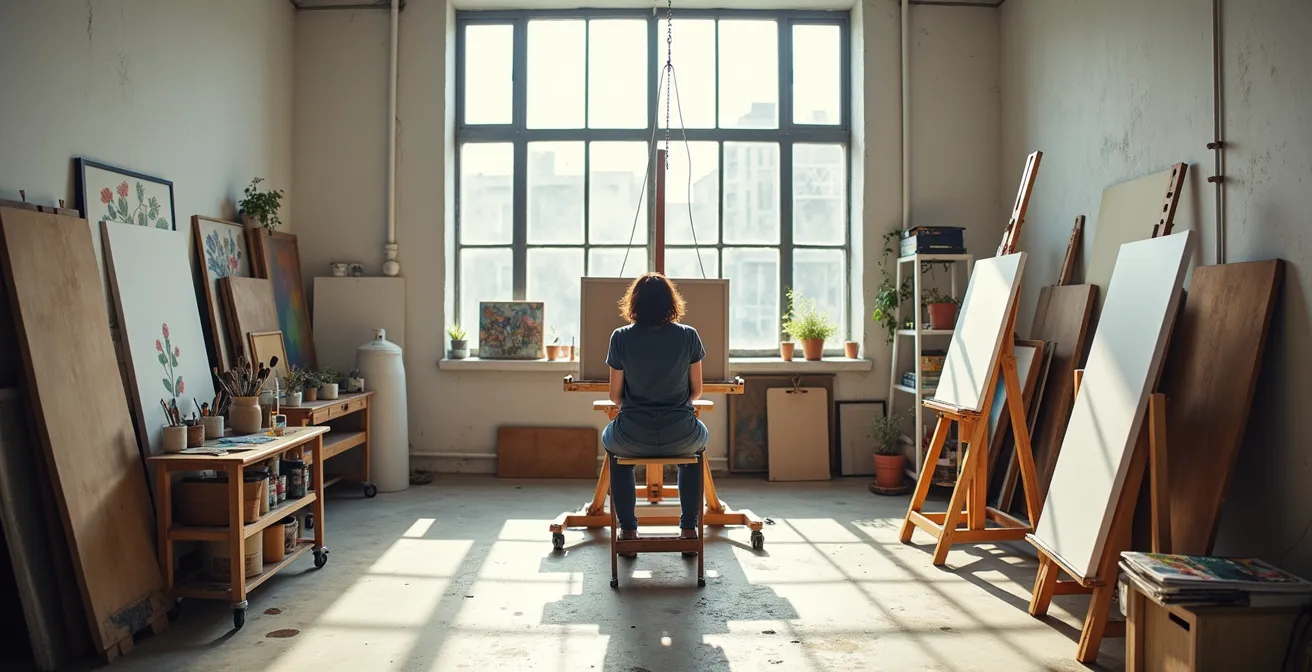
Investing in original local art is a superior strategy for both personal wealth creation and home personalization, decisively outperforming mass-produced decor.
- It functions as a tangible cultural asset with potential for financial appreciation, while factory prints have zero resale value.
- Each purchase directly builds community equity by supporting a local creator’s livelihood and the area’s cultural fabric.
Recommendation: Begin by visiting a local art fair or gallery, not as a consumer, but as a savvy investor looking to understand the stories and artists shaping your community’s cultural landscape.
The walls of a home tell a story. For many, that story begins and ends in the checkout line of a big-box store, with a rolled-up poster or a generic canvas print that can be found in a thousand other living rooms. This choice feels safe, affordable, and easy. It fills a space. But it offers nothing more. It’s a decorative placeholder with a built-in expiration date, destined for aesthetic depreciation the moment it’s hung.
The common advice is simply to “buy what you love,” but this overlooks a more profound opportunity. What if decorating your home could also be a sophisticated investment strategy? The alternative to mass-market decor isn’t just about finding something “unique”; it’s about acquiring a tangible cultural asset. Investing in a piece from a local artist is a strategic decision that generates returns far beyond the aesthetic. It’s an act of patronage-as-investment, a way to build a personal “Portfolio of Place” that grows in both financial and personal value over time.
This guide moves beyond the platitudes. We will not just tell you to support local artists; we will show you the mechanics of why a $300 original canvas is a more intelligent asset than a $100 print. We will explore the strategies for identifying emerging talent before their work becomes expensive, the nuances of commissioning a piece without stifling genius, and the critical preservation techniques that protect your investment for decades to come. It’s time to stop decorating and start collecting.
This article provides a complete framework for becoming a savvy local art investor. From identifying talent to preserving your collection, each section builds on the last to give you a comprehensive understanding of this rewarding pursuit.
Summary: Why Investing in Local Works of Art Is Smarter Than Buying Mass-Market Prints?
- Gallery vs. Art Fair: Where to find emerging talent before they get expensive?
- Why a $300 canvas is a better long-term asset than a $100 IKEA print?
- How to brief an artist for a custom painting without killing their creativity?
- The framing mistake that ruins the aesthetic value of cheap art
- When to move your watercolor painting to avoid UV fading?
- Local Board vs. Global NGO: Where does your specific expertise add more value?
- The disappearance of the local pub and its cost to community cohesion
- Tourist Trap vs. Real Artisan: How to Identify Authentic Local Craftsmanship?
Gallery vs. Art Fair: Where to find emerging talent before they get expensive?
The first step in building your Portfolio of Place is knowing where to look. While established artists command high prices in blue-chip galleries, the real opportunity for a savvy collector lies in identifying emerging talent. This is where you find unique voices and potential for significant value appreciation. The two primary hunting grounds for this are local art fairs and independent galleries. Each offers a distinct advantage. Art fairs are dynamic marketplaces, often featuring dozens of unrepresented artists with original works for under $1,000. They provide a broad overview of the local scene in a single visit, allowing you to quickly gauge trends and styles.
Galleries, on the other hand, offer a curated experience. The gallery owner or curator has already done a level of vetting, staking their reputation on the artists they represent. Building a rapport with a local gallerist can provide invaluable insights and early access to an artist’s new work. As collectors Herbert and Dorothy Vogel famously demonstrated, a strategic approach can yield incredible results. They built a world-class collection by focusing on emerging artists they could afford, proving that a keen eye is more valuable than a vast budget. Their strategy was clear: buy what they loved and what they could physically carry home on public transport. This disciplined approach is a powerful lesson for any new collector.
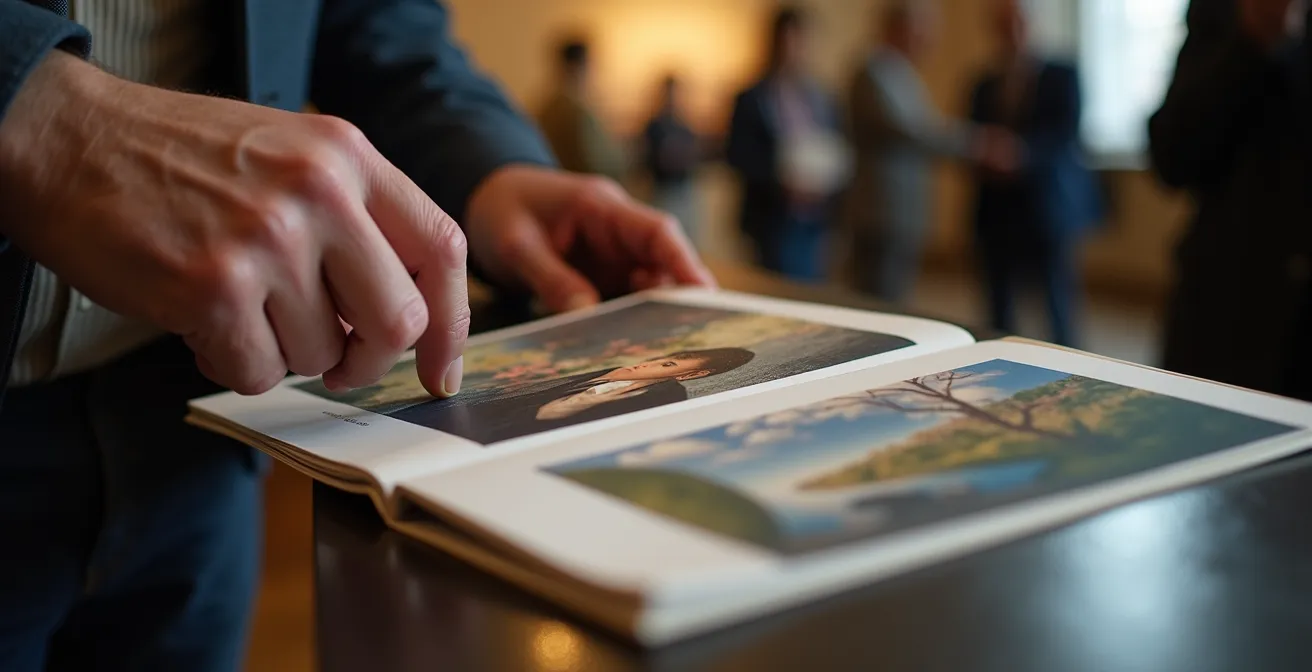
As seen in the image, the act of discovery is a tactile and personal experience. Attending gallery openings, artist talks, and graduate art shows from local colleges are excellent strategies for getting ahead of the market. These events are not just for viewing art; they are opportunities to speak with artists and gallerists, understand their process, and demonstrate your genuine interest. This is how you move from a passive buyer to an engaged patron. By showing up and paying attention, you position yourself to acquire a significant work before an artist’s career—and their prices—take off.
Why a $300 canvas is a better long-term asset than a $100 IKEA print?
The distinction between a local artwork and a mass-market print is not one of degree, but of kind. One is an asset; the other is a disposable good. A $100 print from a global chain is a product of industrial manufacturing. Its value is highest at the point of sale and begins to depreciate immediately. It has no secondary market, no unique story, and its economic benefit is siphoned out of your community to a corporate entity. It is, in investment terms, a guaranteed loss.
Conversely, a $300 canvas from a local artist is a multi-faceted asset. First, it is a direct investment in community equity. The money you spend provides immediate financial support to a creator in your area, encouraging them to continue their craft and contribute to the local cultural fabric. This is not charity; it is a vital economic activity. The arts are a powerful economic engine, and a report on national economic activity confirms the sector’s strength, showing that the total economic value added by arts and cultural industries grew by 13.7% between 2020 and 2021 alone. Your purchase is a stake in that growth.
Second, the piece has the potential for financial appreciation. As the artist’s career develops, the value of their early work can increase significantly. While not every piece will be a lottery ticket, original art from a credible artist will, at a minimum, hold its value far better than a printed reproduction. This comparison highlights the stark difference in long-term value.
| Aspect | $300 Local Canvas | $100 Mass-Market Print |
|---|---|---|
| Economic Impact | Supports local artists and economy, encouraging continuation of craft | Money leaves community for global chains |
| Value Appreciation | Local art often appreciates over time and can increase in value | No appreciation potential |
| Personal Connection | Fosters connection with artist and community, enriching understanding | No personal connection |
| Uniqueness | One-of-a-kind piece | Mass-produced replica |
Ultimately, the local artwork is a unique object infused with a story, a connection to a creator, and a role in your community’s economy. The mass-market print is an anonymous object of decor. One enriches your life and your portfolio; the other simply fills a space on the wall.
How to brief an artist for a custom painting without killing their creativity?
Commissioning a work of art is one of the most rewarding ways to add to your collection. It’s an opportunity to acquire a piece that is deeply personal and perfectly suited to your space. However, the process is a delicate dance between client direction and artistic freedom. A heavy-handed brief can stifle creativity, resulting in a piece that feels stiff and uninspired. The key is to guide, not command. Your goal is to provide a framework of inspiration, not a set of rigid instructions.
Instead of dictating the subject matter, focus on the emotional tone. An artist responds more powerfully to “I want it to feel serene and calm, like a quiet morning” than to “Paint me a beach with two palm trees and a sailboat.” Provide a mood board with color palettes, textures, or even pieces of music that evoke the feeling you’re after. This gives the artist a clear emotional target while leaving the visual interpretation in their capable hands. A great commission is a collaboration, a conversation between your vision and the artist’s unique voice. As celebrated artist Norman Ackroyd RA advises, the ultimate question is not just if you can live with it, but as he puts it in the Royal Academy of Arts guide, ” could you live without it?” That’s the emotional core you’re aiming for.
Your Action Plan for Commissioning Original Art
- Establish a Foundation: Before commissioning, build a rapport with a gallery or artist. This establishes trust and shows you respect their work and process, making them more open to collaboration.
- Provide Inspirational Guardrails: Create a mood board with color palettes, textures, and emotional references. Frame your requests around feeling (‘serene’, ‘energetic’) rather than literal commands to guide their vision.
- Define the Process, Not the Outcome: Structure the project with clear checkpoints (e.g., initial sketch review, color study approval). This ensures alignment without micromanaging the creative execution.
- Trust the Artist’s Voice: Hire an artist for their unique style and perspective. Once the framework is set, step back and allow them the creative freedom to produce their best work.
- Finalize the Logistics: Clearly agree on the timeline, payment schedule (typically 50% upfront, 50% on completion), and what happens if minor revisions are needed.
A successful commission is born from mutual respect. You are not just buying a product; you are enabling the creation of a new cultural asset. By focusing on the “why” and “how it should feel,” you empower the artist to deliver a work that exceeds your expectations and becomes a cherished part of your collection.
The framing mistake that ruins the aesthetic value of cheap art
An artwork’s life doesn’t begin when it’s hung on the wall; it begins when it’s properly framed. Framing is not mere decoration—it is the bridge between the artwork and your living space, and more importantly, it is its primary line of defense. The most common mistake collectors make, especially with more affordable pieces, is to skimp on framing. Placing a valuable or sentimental piece in a cheap, off-the-shelf frame with standard glass and acidic backing is like parking a classic car in a hailstorm. It actively damages the asset you sought to acquire.
The true value of professional framing lies in preservation. High-quality materials are non-negotiable for protecting your investment. As experts in art preservation note, the essential components are UV-protective glass and acid-free mats. Standard glass allows harmful ultraviolet light to pass through, causing irreversible fading and discoloration, particularly in delicate media like watercolors and prints. Acidic mat boards and backing will “burn” the paper over time, leaving yellow or brown stains that destroy the artwork’s integrity and value.
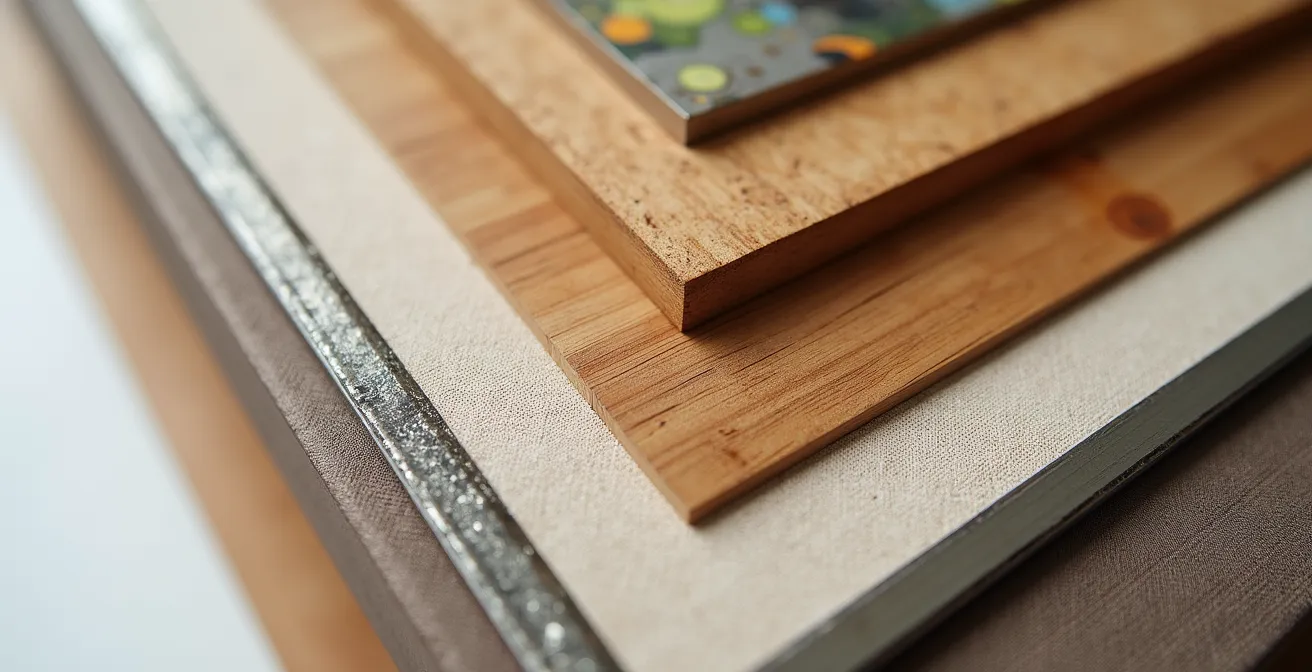
Beyond preservation, a professional framer brings an expert eye to presentation. They understand how to choose materials, colors, and proportions that complement the artwork without overpowering it. A well-chosen frame enhances the visual appeal, integrates the piece into your decor, and signals that the work is valued. This elevation in presentation can make a $300 painting look like a $3,000 one. It transforms the piece from a simple purchase into a curated part of your home’s aesthetic. Investing in professional framing isn’t an extra cost; it’s the final, crucial step in securing the long-term aesthetic and financial value of your art.
When to move your watercolor painting to avoid UV fading?
Once an artwork is framed and hung, the work of preservation continues. Of all the environmental threats to art, light is the most insidious and relentless. Ultraviolet (UV) radiation, present in all daylight, causes photochemical reactions in pigments and paper, leading to fading, yellowing, and brittleness. This damage is cumulative and irreversible. Watercolors, photographs, and works on paper are especially vulnerable. Knowing when and where to display these pieces is critical to their long-term survival.
The first rule is to never hang a valuable or delicate artwork in direct sunlight. Even a few hours of direct sun each day can cause noticeable fading within months. Walls opposite large, south-facing windows are the most dangerous. North-facing walls generally receive the least direct, and therefore safest, light. You should also avoid hanging art above heat sources like radiators or fireplaces, as fluctuations in temperature and humidity can cause materials to expand and contract, leading to warping or cracking. According to the American Institute for Conservation, ideal storage conditions are a stable environment of around 70°F with 50% relative humidity, a goal to aim for in your display areas as well.
For particularly cherished watercolors or prints, consider a strategy of rotation. Don’t leave a delicate piece in the same spot for years on end. By rotating your collection every six months to a year—perhaps with the seasons—you can significantly reduce the total light exposure for any single work. This not only preserves your art but also keeps your living space feeling fresh and dynamic. It allows you to fall in love with a piece all over again when it returns to view. Think of your walls not as static displays, but as a living gallery where the exhibition changes, ensuring every cultural asset in your portfolio is both enjoyed and protected.
Local Board vs. Global NGO: Where does your specific expertise add more value?
As a collector, your contribution extends beyond financial transactions. Your expertise—your eye, your passion, and your local knowledge—is itself a valuable asset that can be invested to generate cultural returns. The question is where this investment yields the highest dividend: on the board of a small, local arts council, or in support of a large, global arts non-governmental organization (NGO)? While global NGOs do important work, your specific value is amplified exponentially at the local level. A global foundation deals in macro-trends and broad funding initiatives; they don’t need to know the most promising painter who just graduated from the city college.
A local arts board, however, thrives on that exact knowledge. Here, your expertise is not abstract but actionable. You can advocate for a specific, under-recognized sculptor. You can help curate a show that reflects the true character of your community. Your understanding of the local scene—who is creating vital work, which communities are underserved, what spaces are at risk—allows you to direct resources with surgical precision. This is where patronage-as-investment transforms into community leadership. Your role shifts from simply acquiring cultural assets to actively participating in their creation and promotion.
Supporting a local board is a direct investment in the cultural infrastructure of your own environment. It helps ensure that the ecosystem that produces the art you love remains vibrant and sustainable. You are not just a donor; you are a steward of your community’s creative future. While a check to a global NGO is a worthy but impersonal gesture, your time and insight on a local board create a ripple effect you can see and feel, strengthening the very fabric of the Portfolio of Place you are building within your own home and city.
The disappearance of the local pub and its cost to community cohesion
Sociologists talk about the importance of “third places”—locations outside the home (the first place) and work (the second place) where people gather, interact, and build the bonds of community. The classic example is the neighborhood pub, cafe, or barbershop. The disappearance of these spaces leads to social isolation and a measurable decline in community cohesion. An often-overlooked but equally vital third place is the local art space: the small gallery, the cooperative studio, the community arts center. When these places vanish, a community loses more than just pictures on a wall; it loses a piece of its soul.
Local art spaces are critical hubs for cultural and social exchange. They are where artists meet patrons, where students are inspired, and where residents from different backgrounds can engage in a shared conversation about ideas and beauty. They host openings, workshops, and talks that function as modern-day town squares. The economic activity they generate is significant, but their primary value is in building the intangible asset of community equity. A vibrant arts scene makes a neighborhood a more desirable place to live, fostering pride and a shared identity.
The failure to invest in local art has a direct, tangible cost. When artists cannot afford studio space or galleries cannot cover their rent, they leave. The cultural landscape becomes barren, replaced by the homogeneity of national chains and sterile commercial developments. Just as the loss of a local pub can sever social ties, the loss of a local gallery severs cultural ones. Supporting local artists and the venues that show their work is therefore not a niche interest; it’s a fundamental act of civic maintenance, preserving the essential third places that prevent our communities from becoming anonymous, disconnected dormitories.
Key takeaways
- Investing in local art is an investment in a tangible asset that can appreciate, while mass-market prints are depreciating goods.
- Your purchasing power directly builds “community equity” by supporting local creators and the cultural economy of your area.
- Protecting your investment through professional, archival framing and managing light exposure is non-negotiable for long-term value.
Tourist Trap vs. Real Artisan: How to Identify Authentic Local Craftsmanship?
In any area with a thriving arts scene, a parallel market of tourist-oriented trinkets inevitably emerges. Distinguishing between authentic, high-quality craftsmanship and mass-produced souvenirs designed to look “local” is the final, essential skill for the savvy collector. This is not about snobbery; it’s about identifying true value and honoring the skill and labor of a real artisan. The key lies in looking beyond the surface and asking the right questions.
An authentic artisan has a story. Their work is an extension of their life, skill, and passion. When you engage with them, ask about their process. An artist who is deeply invested in their craft will light up, eager to discuss their materials, their techniques, and the inspiration behind a particular piece. A vendor selling imported goods will have a generic, rehearsed sales pitch. Look for the artist’s hand in the work itself. Slight variations and imperfections are the hallmarks of handmade items; perfect, identical multiples are a red flag for mass production. A true artisan’s studio or booth will show signs of creation: tools, material scraps, and works-in-progress. As the ARTmine Collector’s Guide notes, this connection is a core part of the value: ” Knowing that your support has contributed to an artist’s journey adds an emotional dimension to your collection.“
Finally, consider the context and the price. Is the item being sold in a dedicated gallery or a stall overflowing with unrelated souvenirs? A real artisan can justify their pricing based on hours of labor, material costs, and the skill required. A tourist trap relies on volume and perceived “bargains.” By taking the time to observe, ask questions, and connect, you not only protect yourself from buying inauthentic goods but also deepen your appreciation for the genuine cultural assets being created in your community. This discernment is what separates a tourist from a true patron of the arts.
Stop thinking of your walls as empty spaces to be filled and start seeing them as a portfolio to be built. Each decision to invest in a local artist over a mass-produced print is a strategic move that pays dividends in beauty, personal connection, and community wealth. Your home can become a gallery that tells not only your story, but the story of your place.
Frequently asked questions on Why Investing in Local Works of Art Is Smarter Than Buying Mass-Market Prints?
How often should I rotate artwork to prevent UV damage?
Your tastes will change over time, and that’s a positive aspect of collecting. Consider a seasonal rotation every 3-4 months for delicate works like watercolors to minimize cumulative light exposure and keep your space feeling fresh.
What areas of my home are safest for watercolors?
North-facing walls receive the least amount of direct, harsh sunlight, making them ideal for light-sensitive works. You should always avoid hanging art on walls directly opposite windows or near sources of heat and humidity, like radiators or bathrooms.
Is museum-grade glass worth the investment?
Absolutely. UV-protective glass, often called “museum glass,” is essential for preserving watercolors, prints, and photographs. It is a standard component in professional custom framing and is the single most important investment you can make to safeguard your art from irreversible light damage.