
Contrary to popular belief, you don’t need an expensive academic subscription to access cutting-edge research. The key isn’t finding a secret back door, but developing a strategic mindset for “information scavenging.” This guide shifts the focus from tools to tactics, showing you how to legally navigate the knowledge ecosystem, critically filter sources, and build a reliable information diet on your own terms.
There’s a universal frustration shared by every self-taught enthusiast, independent researcher, and curious mind: you follow a thread of discovery, click a link to a promising study, and slam into a digital wall. A demand for $40 for a single paper. For anyone outside the privileged walls of a university, it can feel like the world’s most important knowledge is locked away. This barrier seems to suggest that deep learning is a luxury, not a right.
Common advice often circles around using Google Scholar or public libraries, which are valid starting points but rarely the complete solution. These suggestions often miss the bigger picture. The modern world of academic publishing is a complex web of different access models, preprint archives, and institutional repositories. Simply knowing a few tools isn’t enough; you need a strategy to navigate the entire system effectively.
But what if the solution wasn’t about finding a single key, but about becoming a master lock-picker? This is where our approach differs. The true path to democratizing scientific knowledge lies in cultivating a mindset of resourceful, ethical “information scavenging” and, most importantly, critical filtration. It’s about learning how to find the freely available versions of papers that often exist and knowing how to judge the quality of what you find.
This article will guide you through building that exact mindset. We will first explore why these paywalls exist, then provide a concrete workflow to legally find free papers. We’ll also equip you with the critical skills to distinguish between preliminary and vetted research, avoid common interpretation errors, and build a personalized, noise-free science news feed. It’s time to empower your curiosity.
To help you navigate this comprehensive guide, we’ve structured it to build your skills progressively. The following summary outlines the key stages of your journey from a frustrated searcher to an empowered independent researcher.
Summary: Your Path to Independent Scientific Discovery
- Why most cutting-edge research remains hidden behind paywalls?
- How to use tools like Unpaywall to legally bypass journal fees?
- Preprint vs. Peer-Reviewed: Which source should you trust for health decisions?
- The correlation error that leads 60% of amateur researchers to false conclusions
- Optimizing your news feed to filter out pseudo-scientific noise
- Paid Software vs. Free Extensions: Do open-source tools meet accessibility standards?
- Google Analytics vs. Excel: Which is sufficient for a local bakery?
- How to Teach Digital Literacy to Seniors Without Frustration on Both Sides?
Why Most Cutting-Edge Research Remains Hidden Behind Paywalls?
The first step in overcoming a barrier is understanding why it’s there. The academic publishing paywall isn’t a malicious plot to keep knowledge from the public; it’s the result of a decades-old business model. Traditionally, academic journals curated, peer-reviewed, formatted, and printed research, selling subscriptions primarily to university libraries. These libraries became the journals’ main customers, and the costs are staggering. For instance, in 2018, UK universities spent an average of £4 million each on journal subscriptions.
The rise of the internet and the “Open Access” movement was supposed to fix this. In some ways, it has. “Gold Open Access,” for example, makes the final article free for everyone to read. However, this model simply shifts the cost from the reader to the researcher. Scientists or their institutions must pay an “Article Processing Charge” (APC) to get published. This has created a new economic barrier, with a recent analysis showing global spending on article processing charges nearly tripled from $910.3 million to $2.5 billion between 2019 and 2023.
This system, where access to information is tied to immense institutional funding or high publication fees, creates a fundamental tension. As many advocates argue, the knowledge produced—often with public funding—should be a public good. This perspective is a moral compass for the open-science movement, best captured by a simple but powerful idea.
Knowledge sharing is a human right.
– Joseph (quoted in Gates Foundation article), Gates Foundation on research paywall and open access
Understanding this economic and ethical landscape is crucial. It transforms your frustration into a focused mission: to navigate this flawed system and reclaim your right to knowledge. It’s not about “stealing” content; it’s about finding the pathways where knowledge has been legally and ethically set free.
How to Use Tools Like Unpaywall to Legally Bypass Journal Fees?
Now that you understand the “why,” let’s focus on the “how.” The practice of “information scavenging” begins with a systematic workflow. Instead of randomly searching, you can follow a sequence of steps that dramatically increases your chances of finding a free, legal copy of a paper. This approach prioritizes legitimate sources, steering clear of illegal sites like Sci-Hub, which operate outside of copyright law.
A highly effective method is the “waterfall workflow.” It’s a cascading process where you try the easiest step first and move to the next only if it fails. The centerpiece of this modern workflow is a tool called Unpaywall, a browser extension that automatically searches for legally-hosted PDF versions of articles as you browse. As detailed in an overview of its impact, Unpaywall indexes over 24 million articles from thousands of sources, including institutional repositories and author-posted manuscripts, ensuring every source is legal. It integrates seamlessly into your research process, providing a direct path from a locked vault to an open door.

This visual metaphor captures the essence of the process: a guided journey to an accessible version. Here is a practical, step-by-step workflow you can adopt immediately:
- Start with Google Scholar: Search for the paper’s title. It often links directly to free PDFs hosted on university sites or in repositories.
- Activate the Unpaywall Extension: If you hit a paywall, a single click on the Unpaywall browser extension (for Chrome or Firefox) will check its massive database for a free version. A green unlocked padlock icon will appear if one is found.
- Search by DOI on CORE.ac.uk: If Unpaywall fails, take the paper’s Digital Object Identifier (DOI) and search for it on CORE, another massive aggregator of open access research papers.
- Check the Author’s Webpage: Many academics post copies of their own papers on their personal or university faculty pages. A quick search for the lead author’s name can often lead you straight to the source.
- Email the Author Directly: This is the final, and often surprisingly effective, step. Most researchers are happy to share a copy of their work with an interested reader. A polite, concise email is all it takes.
This structured approach transforms the search from a game of chance into a repeatable skill. It’s the core tactic of the resourceful independent researcher.
Preprint vs. Peer-Reviewed: Which Source Should You Trust for Health Decisions?
Accessing a paper is only half the battle. Now you must engage in “critical filtration”: evaluating what you’ve found. Your information scavenging will often lead you to “preprints”—versions of papers uploaded to public servers *before* they have undergone formal peer review. This is a crucial distinction, especially when the topic is your health.
A peer-reviewed article has been vetted by other experts in the field. They’ve checked its methodology, assessed the validity of its conclusions, and recommended it for publication. This process is the gold standard for scientific credibility, but it’s slow, often taking 6-12 months. A preprint is the author’s original manuscript, shared immediately with the scientific community for feedback. It offers speed and transparency but lacks the formal stamp of approval from peer review. While preprints can be updated, the peer-reviewed version is generally considered the fixed, citable record.
The following table, adapted from guidelines by publishers like Springer Nature, breaks down the key differences:
| Aspect | Preprints | Peer-Reviewed |
|---|---|---|
| Speed of Access | Immediate | 6-12 months typical |
| Quality Control | No formal review | Expert peer review |
| Revision Possibility | Can be updated | Fixed after publication |
| Citation Impact | Permanent DOI assigned | Higher credibility |
So, which should you trust? For a major health decision, the consensus is clear: rely on peer-reviewed research. However, this doesn’t mean preprints are useless. They are a window into cutting-edge science and can be very reliable, especially when the authors are from reputable institutions. Furthermore, studies on “Green Open Access”—where authors self-archive a version of their paper, often a preprint or accepted manuscript—show these articles gain a significant citation advantage. This indicates that the broader scientific community values and uses these accessible versions, even if they aren’t the final published format. As research shows that early, open versions of articles are widely read and cited, it confirms their place in the knowledge ecosystem.
The savvy researcher uses both. You can follow preprints to see what’s on the horizon but wait for the peer-reviewed publication before treating a finding as established fact. It’s about understanding the trade-off between speed and certainty.
The Correlation Error That Leads 60% of Amateur Researchers to False Conclusions
Even with a peer-reviewed paper in hand, another layer of critical filtration is required. One of the most common and dangerous traps for any researcher, amateur or professional, is mistaking correlation for causation. The title’s “60%” figure reflects a widely recognized problem: a large portion of misinterpretations stem from this single error. Just because two things happen at the same time (correlation) does not mean one caused the other (causation). For example, ice cream sales and shark attacks are correlated—they both rise in the summer. But eating ice cream doesn’t cause shark attacks; the “confounding variable” is the hot weather.
This may seem obvious, but in complex topics like health and nutrition, it’s easy to be misled by headlines proclaiming “X causes Y.” A lack of foundational scientific literacy makes us all vulnerable. In the U.S., for example, the situation is concerning; according to NAEP, only 22% of 12th-grade students are proficient in science. This highlights a widespread gap in the skills needed to critically evaluate scientific claims, making it even more important for independent learners to be vigilant.
Developing the ability to spot this error is a superpower. You must train yourself to ask critical questions when reading any study that claims a causal link. To make this practical, here is a checklist to run through when you encounter a bold claim.
Action Plan: Your Checklist for Spotting Correlation Errors
- Examine the Claim: Is a direct cause-and-effect relationship being asserted (e.g., “This supplement cures…”) without overwhelming, multi-study evidence, or are the authors more cautious (e.g., “is associated with,” “is linked to”)?
- Look for Controls: Did the researchers mention controlling for confounding variables? A good study will identify and account for other factors that could explain the result (like age, lifestyle, income, etc.).
- Assess Plausibility: Do the researchers explain a plausible biological or physical mechanism that connects the two variables? A statistical link is much stronger when it’s supported by a logical explanation of *how* one thing could affect the other.
- Check the Study Type: Is it a Randomized Controlled Trial (RCT), the gold standard for causation, or an observational study, which can only show correlation? Understand the limits of the evidence presented.
- Consider the Source: Is the claim coming from the study itself, or a media report about the study? News headlines often oversimplify and sensationalize findings, turning a weak correlation into a strong-sounding causation. Always go to the original paper.
By internalizing these questions, you move from being a passive consumer of information to an active, critical analyst. You stop asking “Is it true?” and start asking “How strong is the evidence?”
Optimizing Your News Feed to Filter Out Pseudo-Scientific Noise
So far, we’ve focused on reactive “information scavenging”—finding papers once you have a question. The next level of mastery is proactive: building an information environment that brings high-quality science to you, while actively filtering out the noise of pseudoscience and misinformation. Instead of wading through a polluted river of information, you can curate a clean, clear stream.

The goal is to replace passive scrolling with intentional curation. This means consciously choosing your sources and using tools to organize them. Your social media feeds and news alerts don’t have to be a source of anxiety and confusion; they can become a personalized, high-signal scientific journal. It requires a one-time setup effort but pays dividends in clarity and time saved every single day.
Here are five actionable strategies to create a curated science information feed:
- Create Vetted “X” (Twitter) Lists: Instead of following individual accounts in your main feed, create a private list on X dedicated solely to vetted science communicators, journalists, and researchers. This creates a focused timeline free from other distractions.
- Subscribe to Journals via RSS: Top open-access journals like PLOS ONE or thematic journals in your field of interest almost always have RSS feeds. Use an RSS reader like Feedly or Inoreader to subscribe directly, bypassing media interpretations.
- Aggregate PubMed Searches: PubMed is a massive database of biomedical literature. You can create highly specific searches (e.g., “latest research on vitamin D and immune function”) and use tools like Feedly to turn those searches into a live feed that updates automatically.
- Follow Trusted Institutions: Supplement primary research with high-quality syntheses from institutions dedicated to data communication. Organizations like Our World in Data, STAT News, and the Cochrane Library are essential follows.
- Practice ‘Upstream Sourcing’: Make it a habit. Whenever you see a news article about a study, your immediate reflex should be to find the original research paper. This single habit is the most powerful filter you can develop.
By implementing these steps, you transform your relationship with information. You are no longer a passive recipient but the active architect of your own knowledge ecosystem.
Paid Software vs. Free Extensions: Do Open-Source Tools Meet Accessibility Standards?
As you build your research workflow, you’ll encounter a variety of tools, from expensive reference managers to free browser extensions. A common assumption is that paid, professional software like EndNote must be superior. However, the open-source community has produced incredibly powerful and accessible tools that often outperform their paid counterparts for the independent researcher. This aligns with our core principle: it’s the mindset over the tools.
The key to accessibility isn’t a long list of advanced features; it’s a low learning curve, seamless integration, and zero cost. Free tools excel here. A tool like the Unpaywall extension, for example, works automatically in the background, requiring virtually no user input. It is far more accessible for a beginner than a complex database that requires formal training. Open-source reference managers like Zotero offer robust features like PDF management and citation generation that are more than sufficient for most non-institutional users.
The question is not “Which tool is best?” but “Which tool is best *for the job at hand*?” The table below compares some popular options, highlighting how free tools often provide the most direct and efficient path to the goal.
| Tool | Cost | Key Features | Learning Curve |
|---|---|---|---|
| Zotero | Free | Browser connector, PDF management, citation generation | Low-Medium |
| EndNote | $249+ | Advanced features, institutional integration | High |
| Unpaywall | Free | Automatic OA detection, 20M+ papers | Very Low |
| Consensus.app | Free tier available | AI-powered research synthesis | Low |
As you can see, the free options are not just “good enough”; they are often specifically designed for accessibility and ease of use. A case study on the Unpaywall extension’s adoption at UCSF Library highlights its success precisely because it “fits seamlessly into researchers’ workflows.” The value is in its simplicity and effectiveness. For the self-taught enthusiast, the combination of Zotero for organization and Unpaywall for access covers nearly every need without costing a dime.
Don’t fall into the trap of believing that more expensive means more effective. For your purposes, a lean, fast, and free toolkit is almost always the superior choice. It lets you focus your energy on the research itself, not on mastering complex software.
Google Analytics vs. Excel: Which Is Sufficient for a Local Bakery?
This question seems out of place, but it holds a powerful metaphor for the independent researcher. Let’s reframe it: “Complex Systems vs. Simple Tools: Which is sufficient for *your* research question?” The temptation when entering a new field is to seek out the most powerful, all-encompassing database or software available—the “Google Analytics” of the scientific world. But just as a local bakery owner doesn’t need a complex enterprise analytics suite, you may not need a sprawling, overwhelming database.
Often, a simple, focused tool is far more effective. It keeps you oriented on your specific question and prevents you from getting lost in a sea of irrelevant information. The goal is to find an answer, not to boil the ocean. This principle is perfectly captured by a guide for new researchers.
Just as a bakery owner needs to track sales, not a million web metrics, you need to answer your specific question, not get lost in vast databases.
– Research Skills Guide, Durham University Library Research Guide
What is the research equivalent of a simple spreadsheet? It’s a personal, curated research log. Instead of trying to master a complex system, you can build your own small, perfect database in a tool as simple as Google Sheets or Excel. This log becomes your external brain, tracking what you’ve read, what you’ve learned, and how much you trust each source. It’s the ultimate tool for focused, mindful research.
Here’s a simple structure for your own research log:
- Column A: Study Link/DOI: A direct link to the paper.
- Column B: Key Finding: A one-sentence summary in your own words.
- Column C: Sample Size: A quick note on the study’s scale (e.g., “n=50” or “meta-analysis of 12 studies”).
- Column D: Your Trust Score (1-10): Your personal assessment of the evidence quality, based on our earlier checklists.
- Column E: Date Accessed: To keep track of your timeline.
- Column F: Relevance: How directly does this answer your core question?
This simple spreadsheet does more than a complex program to keep you on track. It forces you to synthesize, evaluate, and connect information directly to your goals. It is the perfect embodiment of choosing the right-sized tool for the job.
Key Takeaways
- The Barrier is Economic, Not Personal: The paywall system is a flawed business model. Overcoming it is about strategy, not finding loopholes.
- A Legal Workflow Exists: By following a “waterfall” method using tools like Unpaywall and direct author outreach, you can legally access a vast amount of research.
- Access Is Not Enough; Filtration Is Key: Learning to distinguish preprints from peer-reviewed articles and spotting correlation-causation fallacies are essential skills for any researcher.
How to Teach Digital Literacy to Seniors Without Frustration on Both Sides?
Once again, let’s translate this title into a principle for our journey: “How to Teach *Yourself* a New Field Without Frustration.” When you venture into scientific literature for the first time, you are, in a sense, a “beginner,” regardless of your age or intelligence in other areas. The landscape is new, the language is technical, and the sheer volume of information can be overwhelming. The principles of teaching digital literacy effectively—patience, scaffolding, and starting with core concepts—apply perfectly to your own self-education.
The key is scaffolding your learning. You don’t start learning a new language by reading advanced philosophy; you start with basic vocabulary and grammar. Similarly, you don’t jump into the most complex, niche research papers. You build a foundation first. This means starting with review articles, which summarize the state of knowledge in a specific field, and then gradually moving to more specific studies.
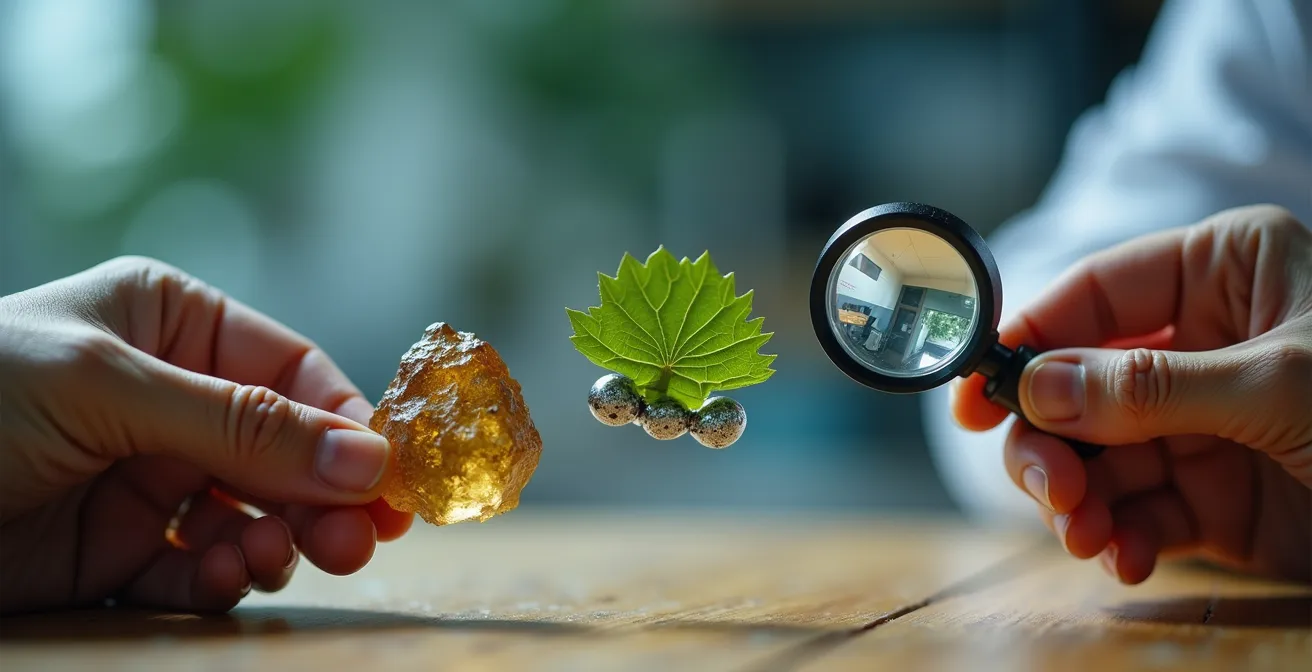
This image of progressing from simple examination to complex understanding is the heart of the self-teaching process. It’s about building your skills and confidence in layers. Here’s a practical approach to scaffolding your own scientific literacy:
- Start with Review Articles: When exploring a new topic, add “review” to your search terms (e.g., “gut microbiome review”). These papers are written for a broader audience and will give you the foundational knowledge and key vocabulary for that field.
- Learn to Read a Paper Structurally: Don’t try to read a research paper from start to finish like a book. Learn the structure: start with the Abstract (the summary), then jump to the Conclusion/Discussion (what the authors think it means), and only then dive into the Methods and Results if you need to understand the details.
- Embrace “Good Enough”: You do not need to understand every single word or statistical test to grasp the main takeaway of a paper. Focus on the core finding and the strength of the evidence. It’s okay to feel a little out of your depth at first.
- Be Patient and Persistent: The first few papers will be the hardest. The language and format will feel alien. But with each one you read, the process will become faster and more intuitive. You are building a new kind of literacy, and that takes time.
By treating yourself as a student who deserves a structured, patient learning path, you can avoid the frustration that causes so many independent learners to give up. You are your own best teacher.
Your journey to becoming an empowered, independent researcher begins now. It is a path of continuous learning, not just about your topics of interest, but about the process of inquiry itself. Start today by choosing one question you’re curious about and applying this strategic mindset to find the answer.