Spotting genuine crafts goes beyond surface-level inspection; it’s about uncovering the story, materials, and economics behind the object.
- Authentic pieces have a traceable material story and provenance that a real maker can articulate.
- The price directly reflects irreplaceable hours of skilled labor, not mass-production margins.
- An artisan’s ability to discuss their process and challenges is the ultimate proof of creation.
Recommendation: Use the “three revealing questions” to engage with vendors, turning a simple purchase into a meaningful connection and verifying their role as the creator.
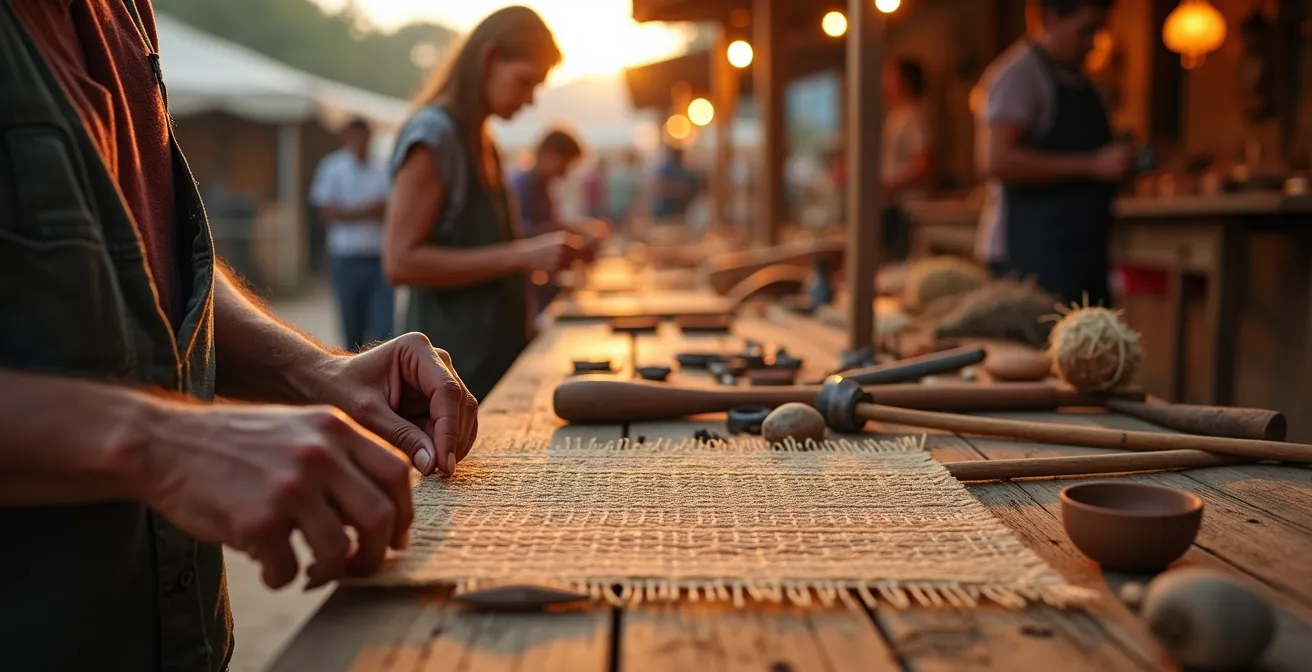
The marketplace buzzes, stalls overflowing with colorful textiles, intricate carvings, and gleaming pottery. As a traveler, you’re searching for more than a mere souvenir; you want a tangible piece of the culture, a story to take home. Yet, a nagging doubt persists: is this beautiful object a genuine, locally-made treasure or a mass-produced import designed to look the part? Many will advise you to “look for imperfections” or “avoid the main tourist street,” but this advice barely scratches the surface. It treats a complex issue like a simple checklist, failing to equip you with a true understanding.
The truth is, distinguishing authentic craftsmanship from industrial imitation isn’t just about visual cues. It requires an investigative mindset. The real key lies not in finding a flaw, but in tracing what I call the “Chain of Authenticity”—the complete, unbroken line connecting raw material, skilled hands, invested time, and the final creation. It’s a shift from being a passive consumer to an engaged cultural anthropologist, capable of seeing the invisible ingredients of heritage and passion embedded in an object.
This guide moves beyond the platitudes. We will deconstruct the anatomy of a genuinely crafted piece, from the stitching on a leather wallet to the patina on a wooden bowl. We’ll provide you with the exact questions that separate a true maker from a reseller. By understanding the economics of craft, the subtle tricks of the trade, and the tools for uncovering transparency, you will learn not just how to buy better, but how to invest in the preservation of cultural legacy itself.
Contents: An Investigator’s Guide to Authentic Craftsmanship
- Hand-stitched vs. Machine-sewn: How to tell the difference in leather goods?
- The 3 questions that reveal if a vendor actually made the product
- Why authentic craft costs 3x more than the airport version?
- The chemical trick sellers use to make new wood look like antiques
- How to locate government-certified craft centers in remote villages?
- How to use transparency apps to trace where your t-shirt was really sewn?
- Gallery vs. Art Fair: Where to find emerging talent before they get expensive?
- How to Spot Greenwashing in Ethical Fashion Brands Before You Buy?
Hand-stitched vs. Machine-sewn: How to tell the difference in leather goods?
The difference between a hand-stitched leather wallet and its machine-sewn counterpart is not just aesthetic; it’s a lesson in durability and the value of time. Machine stitching uses a “locking stitch,” where two threads lock together in the middle of the leather. If one thread breaks, the entire seam can quickly unravel. It’s fast, efficient, and designed for volume production. In contrast, traditional leather artisans use a method called the saddle stitch. This involves passing two needles through the same hole in opposite directions, creating a simple, overlapping pattern. If one thread of a saddle stitch breaks, the other stitches hold the seam firmly in place.
How can you tell the difference? Look closely at the stitch line. A machine stitch is perfectly uniform and straight. A hand-sewn saddle stitch, even when executed by a master, will have a slight, rhythmic angle. The holes are often made with a diamond-shaped awl, giving the thread a subtle zigzag appearance. The thread itself may be thicker and waxed. This meticulous process is the first link in the Chain of Authenticity, representing a commitment to longevity over speed.
Case Study: Munich’s Leather Artisans vs. Tourist Shops
This difference is starkly visible in craft markets worldwide. For instance, a detailed comparison found that in Munich’s traditional workshops, artisans spend 15-20 minutes hand-stitching a single wallet. This investment of time results in a product that can last for decades. In nearby tourist shops, machine-sewn versions are produced in under two minutes, often failing within a year or two. The hand-stitched item is not just a wallet; it’s an artifact of time and skill.
The 3 questions that reveal if a vendor actually made the product
Beyond physical inspection, the most powerful tool in your investigative kit is conversation. A reseller can memorize a script about an item’s origin, but they cannot fake the deep, lived-in knowledge of a creator. The artisan’s narrative signature—their personal story of creation—is impossible to replicate. Your goal is to gently probe for this signature with open-ended questions that invite more than a “yes” or “no” answer. Instead of asking “Did you make this?” which can be met with a simple lie, you need to unlock the story behind the object. A true maker will light up, eager to share the details of their craft.
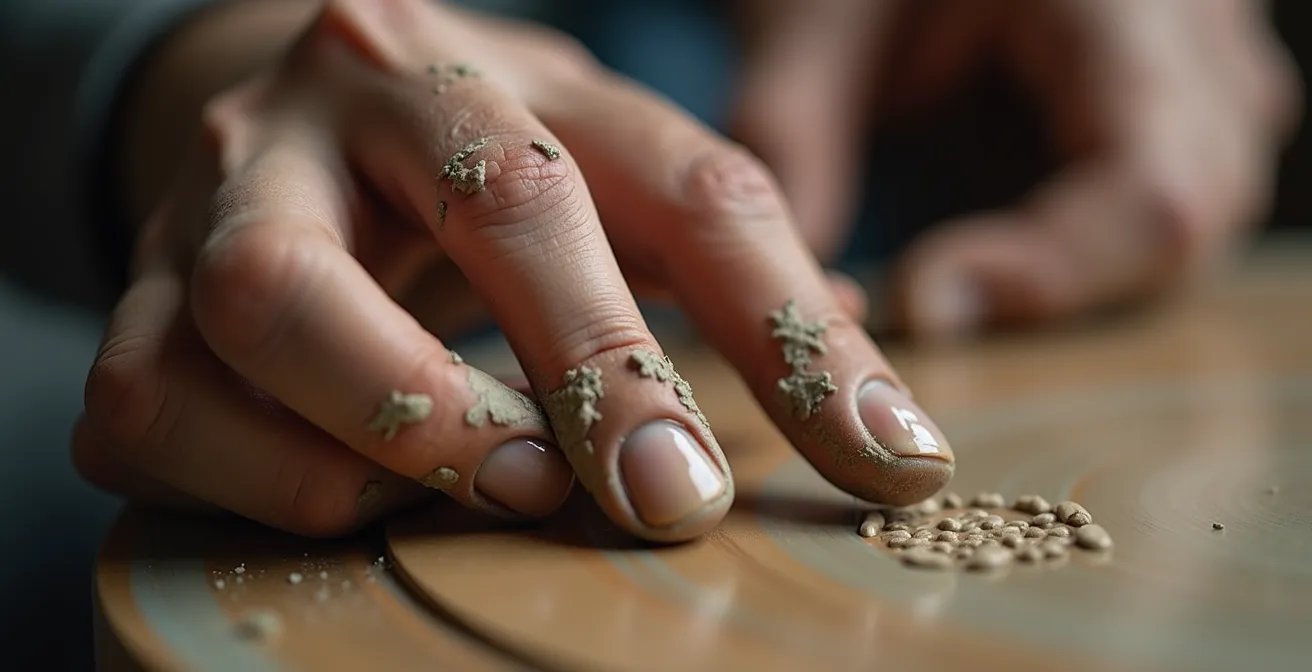
These three targeted questions are designed to bypass rehearsed sales pitches and connect you directly with the artisan’s experience. They focus on process, materials, and creative possibility—areas where a reseller’s knowledge will be shallow, but an artisan’s is profound. An honest artisan will have ready answers, often with anecdotes about a difficult step or a favorite material supplier. A reseller will likely deflect, generalize, or become defensive. This dialogue is where the authenticity of the transaction is truly confirmed.
- The Process Question: “What was the most challenging part of making this specific piece?” True makers will describe technical difficulties, material quirks, or a new technique they were trying.
- The Material Source Question: “Where do you source your [specific material, e.g., this clay, this type of wood]?” Authentic artisans have a deep connection to their materials and know their suppliers, often with stories about the material provenance.
- The Custom Request Question: “This is beautiful. Could you make a similar piece but with a [small, specific modification]?” A real craftsperson will immediately engage with the feasibility, timeline, and cost of the request. A reseller, unable to fulfill it, will typically shut the conversation down.
Why authentic craft costs 3x more than the airport version?
The price tag on an authentic artisan piece often causes sticker shock, especially when a similar-looking item is available for a fraction of the cost at a tourist stall. This price difference isn’t arbitrary markup; it’s a direct reflection of the economic footprint of craftsmanship. The cost of a handmade object is a transparent ledger of time, skill, and quality materials. It pays for the years of training an artisan has invested, the premium, often locally sourced materials they use, and, most significantly, the hours or even weeks of focused labor poured into a single creation.
Mass-produced souvenirs follow a different economic model, one built on volume and speed. Labor is often outsourced to regions with low wages, materials are purchased in bulk at the lowest possible price, and assembly lines are optimized for minute-long production cycles. This system has a profound cultural and economic impact. As reported by PBS, the consequences are stark: in the fashion industry alone, domestic clothing production in the US has plummeted from 70% in the 1980s to a mere 3% today, eroding local skills and economies. When you buy from a true artisan, you are not just acquiring an object; you are casting a vote for a sustainable, human-scale economy.
This table breaks down the fundamental differences in the cost structure between a handmade item and its mass-produced equivalent, illustrating why authentic work carries a premium.
| Cost Factor | Artisan Product | Mass Production |
|---|---|---|
| Labor Time | 15-40 hours per piece | 5-15 minutes per piece |
| Material Quality | Premium, locally sourced | Standard, bulk purchased |
| Skill Development | 5-10 years training | 2-4 weeks training |
| Production Volume | 5-10 pieces/month | 1000+ pieces/day |
| Lifespan | 20+ years | 1-3 years |
The chemical trick sellers use to make new wood look like antiques
The allure of an “antique” finish is powerful, suggesting history and character. Unscrupulous sellers capitalize on this by using chemical tricks to artificially age new, low-quality wood. These methods create a superficial patina that can easily dupe an untrained eye. One common technique involves applying a solution of steel wool dissolved in vinegar. This mixture reacts with the tannins in the wood, rapidly creating a dark, aged-looking stain. While effective at a glance, this artificial aging lacks the depth and complexity of a natural patina developed over decades of use.
A true patina is the story of an object written on its surface. It’s the result of oxidation, sunlight, and the oils from human hands. This wear is never uniform; it concentrates on functional areas like handles, edges, and knobs, while protected areas remain lighter. Artificial aging, on the other hand, is often applied evenly across the entire piece, resulting in a monotonous, unconvincing finish. As an investigator of authenticity, you must learn to read these surface stories and spot the forgeries. A case study from Portugal highlights how tourist shops sell items with uniform distressing, a dead giveaway compared to the naturally worn pieces from rural workshops.
Your Checklist for Detecting Fake Wood Aging
- The Smell Test: Bring the object close to your nose and sniff the surface. Chemical aging processes often leave a sharp, vinegary, or metallic odor, whereas a naturally aged piece smells earthy, waxy, or simply of old wood.
- The Pattern Check: Examine the wear patterns. Is the distressing uniform across the entire piece? Authentic wear is logical, concentrating on areas that would be touched or used frequently.
- The Depth Test: If appropriate, discreetly scratch a hidden area with your fingernail. A chemical stain is a surface treatment and may flake off, revealing fresh wood underneath. A true patina penetrates deep into the wood grain.
- The Light Angle Test: Use your phone’s flashlight and shine it across the surface at a low angle (around 30 degrees). Artificial aging often creates a flat, one-dimensional look. A real patina has microscopic depth and will show complex variations in how it absorbs and reflects light.
- The Tool Mark Analysis: Look for signs of modern tools. Perfectly circular marks may indicate a power sander was used to create “wear,” a tool unavailable when the piece was supposedly made.
How to locate government-certified craft centers in remote villages?
The most authentic crafts are often found far from the tourist trail, in the small villages and workshops where traditions are passed down through generations. But how do you find these hidden gems? The key is to leverage official channels and local knowledge before you even start your journey. Many countries have national or regional bodies dedicated to preserving and promoting their artisanal heritage. These organizations often maintain lists of certified craft villages or registered artisans, providing a reliable roadmap for the discerning traveler.
For example, Vietnam’s government has a robust system to support its craftspeople; its national handicraft industry encompasses over 600 certified villages with 10 million workers. Finding these official seals or designations (like Portugal’s “Artesanato de Portugal”) is your first step. Before you travel, search online for the target country’s “ministry of culture,” “handicraft board,” or “artisan federation.” These websites are often treasure troves of information. Once on the ground, don’t just rely on tourist maps. Visit local material suppliers—like timber yards, clay pits, or specialty fabric stores—and ask for recommendations. They are the gatekeepers of the local craft economy and can point you toward the most respected artisans in the area.
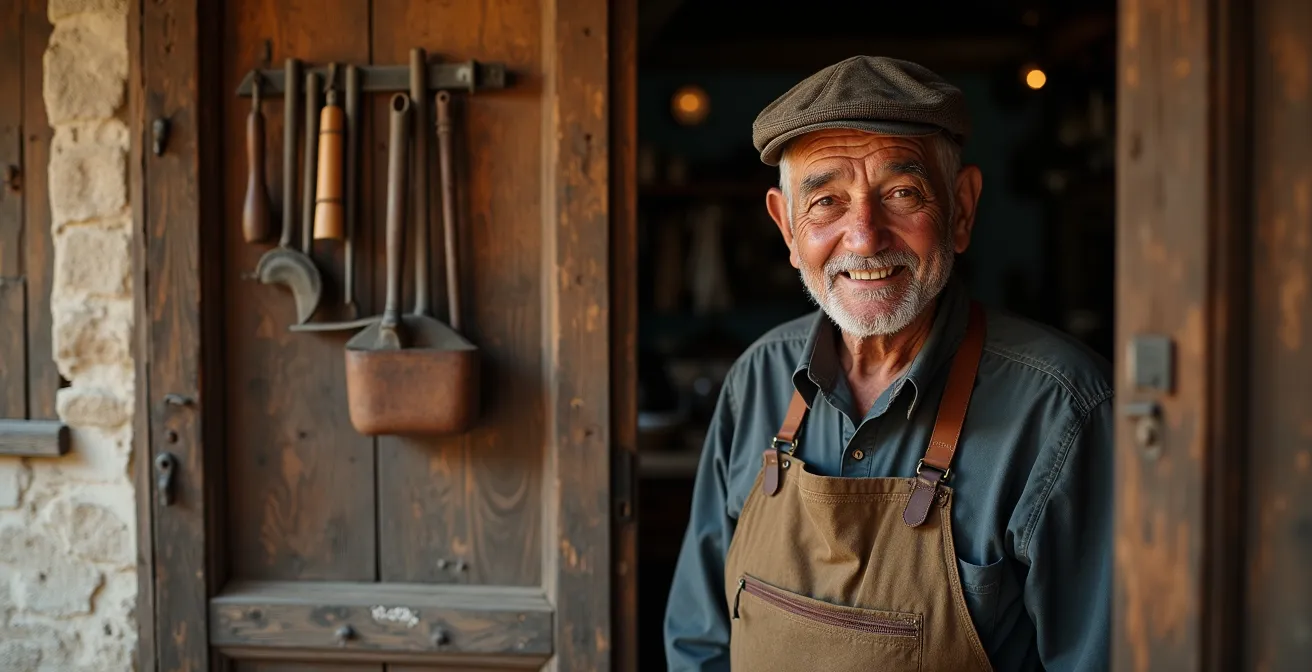
Thinking like an investigator means using unconventional sources. Local art schools are another fantastic resource, as they often partner with master craftspeople for workshops and apprenticeships. Finally, harness the power of social media by searching location-specific hashtags in the local language (e.g., #artesanato[cidade] in Portuguese). This can lead you directly to an artisan’s workshop, geotagged on a map, bypassing the middlemen entirely.
How to use transparency apps to trace where your t-shirt was really sewn?
In the world of fashion, the “Made in…” tag is notoriously unreliable. A garment might be assembled in one country from fabric woven in another and materials sourced from a third, with only the final assembly location listed. To combat this opacity, a new generation of transparency apps and QR code systems aims to give consumers a window into the full supply chain. Brands can integrate QR codes on their labels that, when scanned, link to a digital passport for the item, detailing its journey from raw material to finished product. These tools have the potential to be revolutionary, but only if you know how to critically evaluate the data they provide.
The first question to ask is: who provides the data? Is it self-reported by the brand, or is it verified by an independent, third-party auditor? Self-reported information can easily be a form of marketing, highlighting only the positive aspects of the supply chain. Look for data backed by respected organizations like Fair Trade, B-Corp, or other credible auditors. A truly transparent app won’t just say “Made in Vietnam”; it will provide the specific factory name, address, and recent audit reports. This trend towards verifiable provenance is even being adopted by major luxury players. For instance, LVMH’s initiatives include extensive apprenticeship programs that emphasize skill and traceability, showing that even at the highest end of fashion, the “Chain of Authenticity” is becoming a critical asset.
Before you trust a QR code, apply this verification checklist:
- Audit the Auditor: Check if the app’s data comes from independent, third-party audits or is simply self-reported by the brand.
- Demand Specificity: Look for specific factory addresses and certification numbers, not just a generic country of origin.
- Trace the Full Chain: A good transparency tool should show the complete journey, including the fabric mills and dye facilities, not just the final garment factory.
- Test the Link: Scan the QR code. Does it lead to an actual audit report or a detailed production map, or just a slick marketing page?
- Cross-Reference Claims: Verify the app’s claims against public databases from certification bodies like Fair Trade or B-Corp to ensure they are current and valid.
Gallery vs. Art Fair: Where to find emerging talent before they get expensive?
For the art-focused traveler, the hunt for authenticity extends to finding emerging artists before their work becomes prohibitively expensive. While established commercial galleries and major art fairs are great for seeing well-known artists, they are often the last stop in an artist’s journey to fame, not the first. To discover raw talent, you must go where the art world itself goes for discovery: the spaces where art is made and debated, not just sold. This means bypassing the polished, high-stakes environments and seeking out the grassroots of the creative ecosystem.
University MFA (Master of Fine Arts) thesis exhibitions, typically held in late spring, are one of the best places to start. These shows are the culmination of years of intensive work and represent the first public-facing moment for a new generation of talent. Curators, collectors, and gallerists flock to these exhibitions to scout. Similarly, “open studio” weekends in designated artist districts offer an unfiltered look into an artist’s practice. You can speak with the artists directly in their creative space, see works in progress, and often purchase pieces at pre-gallery prices. Following independent curators on social media is another insider tactic; their job is to find the next big thing, and their exhibitions often feature artists on the cusp of breaking out.
In the digital realm, artists are increasingly building their own communities and client bases. Social media platforms like Instagram have become virtual studios and galleries. A study on handmade businesses highlighted this shift, showing that craft-focused enterprises with an active social media presence achieve 50% higher engagement rates than those without. By following these artists, you can track their development and gain access to new work directly. Artist-run cooperative galleries are another key venue, as they feature the work of their members before they achieve commercial representation, offering a ground-floor opportunity for collectors.
Key Takeaways
- Authenticity is a story, not a flaw: True craft has a traceable “Chain of Authenticity” from material to maker.
- The price tells the truth: Higher costs reflect the value of an artisan’s time, skill, and quality materials, not just a markup.
- Your questions are your best tool: Engaging a vendor about their process, materials, and customization options is the ultimate test of a true creator.
How to Spot Greenwashing in Ethical Fashion Brands Before You Buy?
As consumers become more conscious of their environmental and social impact, many brands have responded with “green” marketing. However, much of this is greenwashing: the practice of making misleading claims about sustainability to attract customers. A brand might release a “conscious collection” made from recycled materials while continuing its primary business model of overproduction and waste. The language of greenwashing is a key red flag. It relies on vague, unregulated terms like “eco-friendly,” “green,” or “sustainable” without providing specific data or proof to back them up.
Genuine sustainability, in contrast, is about radical transparency and measurable action. A truly ethical brand can and will provide specific metrics, such as “we reduced our water usage by 47% in the last production cycle.” They will be open about their entire supply chain, not just cherry-picking one “sustainable” material to highlight. Crucially, they will be validated by credible, third-party certifications like B-Corp, Fair Trade, or GOTS (Global Organic Textile Standard), rather than flaunting self-created “eco” logos. As some high-end fashion labels have realized, the ultimate antidote to greenwashing is investing in traditional craftsmanship itself—a model inherently based on slow production, high-quality materials, and longevity.
This comparison table provides a clear guide to distinguishing authentic sustainability commitments from deceptive greenwashing tactics. Use it as a filter when evaluating a brand’s “ethical” claims.
| Aspect | Genuine Sustainability | Greenwashing Red Flags |
|---|---|---|
| Claims | Specific metrics (e.g., ‘47% reduction in water use’) | Vague terms (‘eco-friendly’, ‘sustainable’) |
| Transparency | Full supply chain disclosure | Only highlights one sustainable material |
| Certifications | Third-party verified (B-Corp, Fair Trade) | Self-created ‘green’ labels |
| Production Volume | Limited, made-to-order | Fast fashion pace with ‘green’ collection |
| End-of-life Plan | Take-back program, repair services | No circular economy strategy |
Your next journey is an opportunity not just to see a place, but to connect with its culture. Apply this investigative mindset, ask questions, and choose to invest in the hands and stories that keep traditions alive. By seeking out the Chain of Authenticity, you transform a simple purchase into a meaningful act of cultural support.